Granby River fishing limited to mornings through Sept. 15
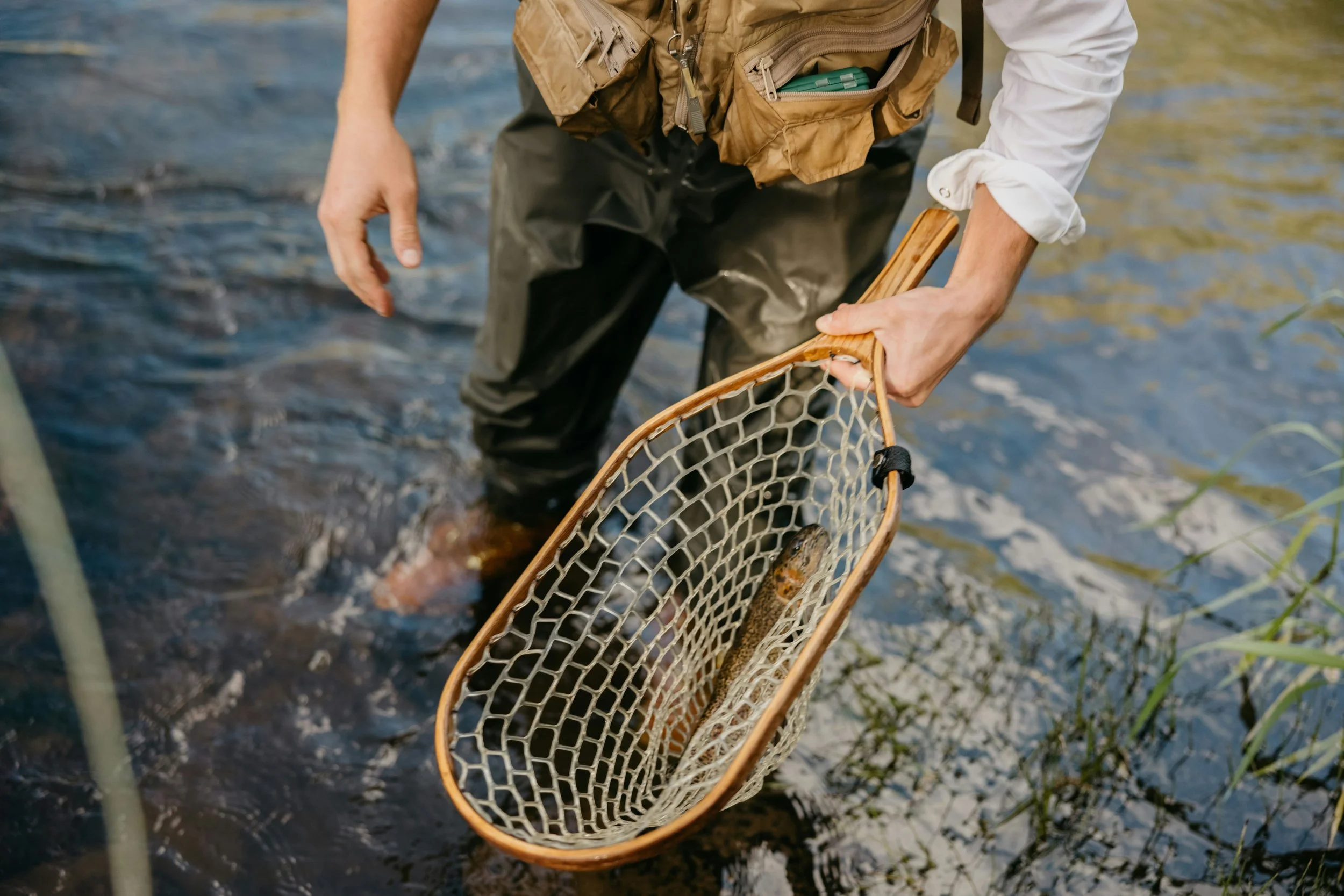
A man holds a fish in a net.
Photo by Matthew McBrayer
BOUNDARY BC — Anglers may continue fishing the Granby River and its tributaries before noon, but fishing is prohibited during the afternoon and evening under a new provincial water-temperature restriction.
The closure took effect July 30 and remains in place through Sept. 15. It prohibits fishing on the Granby River and its tributaries from noon until midnight each day.
The Grand Forks Wildlife Association shared the change on Facebook, saying the decision was made because of higher-than-normal water temperatures.
The province lists the Granby measure among its water-temperature fishing closures. Its public notice confirms the affected waters, dates and hours but does not explain the river-by-river assessment behind the decision.
Kettle and West Kettle remain closed all day
The Granby announcement prompted questions about why morning fishing remains available there while the neighbouring Kettle River is subject to a full-day closure.
Commenting on the wildlife association’s post, Les Brazier asked why the Kettle could not also receive a morning opening.
The Kettle has not been omitted from the regulations. It is subject to a stricter standing rule.
Fishing is prohibited on the Kettle River and its tributaries from July 25 through Sept. 15. The same full-day closure applies to the West Kettle River and its tributaries.
Unlike the Granby restriction, the Kettle and West Kettle closures do not provide an opening before noon.
The question is therefore not why the Kettle received no protection, but why anglers may fish the Granby in the morning while the Kettle and West Kettle remain closed throughout the day.
Provincial data show hotter conditions and lower flows
Public data released shortly before the closures offer some context for the different regulations.
A B.C. River Forecast Centre report generated July 27 compared temperatures and streamflows at stations on the Granby, Kettle and West Kettle rivers.
At the Granby River station in Grand Forks, the mean of the previous seven days’ maximum daily temperatures was 23.49 C. The highest temperature during the preceding 24 hours was 22.9 C.
The Granby’s seven-day average streamflow was at the ninth percentile for that time of year and represented approximately 15.5 per cent of its long-term mean annual discharge.
Conditions were more severe at the two stations farther upstream in the Kettle system.
At the Kettle River near Westbridge, the mean of the previous seven days’ maximum temperatures was 24.63 C. Its seven-day streamflow was at the second percentile and approximately 12.6 per cent of its long-term mean annual discharge.
At the West Kettle River at Westbridge, the seven-day maximum-temperature average was 23.91 C. Its streamflow was listed as the lowest recorded for that period and was approximately 7.1 per cent of its long-term mean annual discharge.
Those figures show that all three rivers were experiencing elevated temperatures, while the monitored Kettle and West Kettle locations were also recording particularly low flows.
They may help explain why the Kettle systems retain complete closures while the Granby has a morning opening. That remains an inference, however. The regulation notice does not say which measurements or biological considerations led officials to select one form of closure over another.

Federal gauges support local commenter’s account
In the Facebook discussion, Andres Dean pointed out that automated equipment monitors water levels and temperatures in the local river system.
Dean said the Granby was reporting a temperature of 19.6 C at the time of the discussion.
The federal Water Survey of Canada identifies the relevant stations as:
Granby River at Grand Forks, station 08NN002;
West Kettle River at Westbridge, station 08NN003; and
Kettle River near Westbridge, station 08NN026.
The B.C. River Forecast Centre’s report confirms that temperature and streamflow data were being collected at all three stations.
Environment and Climate Change Canada says its near-real-time hydrometric information is transmitted automatically from stations operated by the department and its partners. The data are normally posted within two hours, but they are preliminary and receive only limited verification before being published.
Dean’s exact 19.6 C reading cannot be matched to the record without the date and time attached to it. River temperatures also change considerably over the course of a day.
The July 27 provincial snapshot illustrates that variation. During the preceding 24 hours, the Granby station recorded temperatures ranging from 19.3 C to 22.9 C. A single reading taken during a cooler part of the day would not show the maximum temperature fish experienced later or earlier in that period.
Dean also said he had seen and spoken with federal employees working at the Granby gauge. That is his firsthand account. The federal information confirms that the station is part of the national hydrometric network, but it does not identify which agency’s employees attended the site on a particular occasion.
Temperature thresholds can trigger restrictions
The province’s fisheries drought-response plan recommends using longer temperature patterns where continuous monitoring is available.
One measurement used is the mean weekly maximum temperature: the average of each day’s maximum temperature over seven days. Where continuous data are unavailable, a maximum daily reading may be used as a substitute.
As general guidance for protecting fish in streams and rivers, the plan says the mean weekly maximum should not exceed 20 C and the maximum daily temperature should not exceed 23 C. It also calls for consideration of species-specific temperature requirements.
The B.C. River Forecast Centre says reaching either the 20 C weekly benchmark or the 23 C daily benchmark may trigger fishing closures and water-use restrictions. They are not described as automatic closure points, and managers may also consider streamflow, species, habitat and local conditions.
The July 27 report showed that the mean weekly maximum was above 20 C at all three Boundary stations. Each station had also exceeded 23 C on multiple days during the preceding week.
Full-day closures added elsewhere in Region 8
Several other Region 8 waterways were placed under complete water-temperature closures beginning July 30.
Fishing is prohibited through Sept. 15 on:
Bessette Creek and its tributaries;
the Similkameen River and its tributaries;
the Okanagan River; and
the Okanagan River oxbows.
Those closures do not provide the morning fishing period available on the Granby.
The Kettle and West Kettle restrictions were already part of the standing 2025–27 Region 8 regulations. The Granby, Similkameen, Bessette Creek and Okanagan restrictions were added as in-season changes effective July 30, 2026.
Slocan River has a standing afternoon closure
No additional 2026 water-temperature closure is currently listed for Region 4, which includes the West Kootenays.
A similar time-of-day restriction is already part of the standing regulations for the Slocan River and its tributaries.
Fishing is prohibited from noon until midnight between July 15 and Aug. 31. The regulation includes exceptions for Koch Creek upstream of falls located approximately 700 metres downstream of the Little Slocan Forest Service Road bridge and for tributaries of Little Slocan Lake.
Lemon Creek is separately closed to fishing. Where the Slocan system is open, additional bait and catch-and-release rules apply.
The Slocan restriction is part of the standing 2025–27 Region 4 regulations rather than a new in-season closure announced this summer.
Anglers should check the province’s online fishing regulations before heading out because in-season restrictions may be added or amended as conditions change.
For now, fishing remains permitted on the Granby River and its tributaries from midnight until noon. Fishing is prohibited from noon until midnight.








Big White Ski Resort and the Canadian Ski Patrol’s Ogopogo Zone have received separate 2026 awards from the patrol’s Pacific South Division.