Smoke expected through Saturday as air-quality warning covers Grand Forks
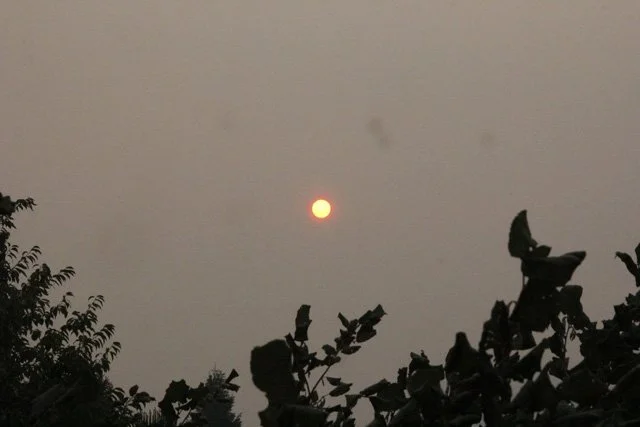
Wildfire smoke mutes the morning sun above the treetops in Grand Forks on Thursday, Aug. 6.
Photo: Boundary Sentinel
The warning extends across the Boundary, West Kootenays and Okanagan, where smoke could push health risks into the very high range.
GRAND FORKS, B.C. — Grand Forks remained under a yellow air-quality warning Thursday morning as widespread wildfire smoke settled over the Boundary and much of the Southern Interior.
Environment Canada and the B.C. Ministry of Environment and Parks issued the latest warning at 4:58 a.m. Thursday. It has a moderate impact level and high forecast confidence.
The warning says smoke is affecting, or is likely to affect, communities during the next 24 to 48 hours. The Boundary warning area specifically includes Grand Forks, Midway and Greenwood.
Environment Canada is forecasting widespread smoke in Grand Forks throughout Thursday, Thursday night, Friday and Saturday.
The temperature is expected to reach 35 C Thursday and 37 C Friday before falling to 31 C Saturday. The forecast calls for clear conditions Saturday night and sunshine Sunday.
A southeast wind of about 20 kilometres per hour is expected to develop Thursday afternoon before becoming light during the evening. On Friday, the wind is forecast to shift to the southwest, with gusts reaching 40 kilometres per hour during the afternoon.
Neither change is currently forecast to clear the smoke. Widespread smoke remains in the Grand Forks forecast after both wind shifts, with Saturday night the first forecast period in which smoke is no longer mentioned.
No single fire identified as source
Officials have not attributed the smoke over Grand Forks to one particular wildfire.
The provincial warning notes that smoke conditions can change over short distances and vary considerably from hour to hour. Smoke may be carried from several fires and can move through the region at different elevations.
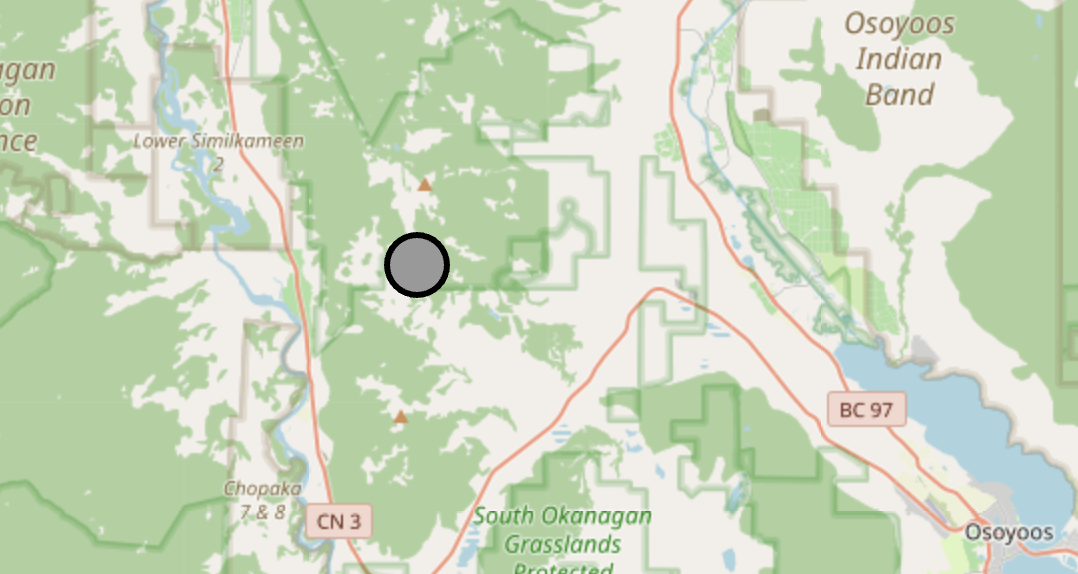
Grand Forks has provincial air-monitoring stations at City Hall and the Grand Forks Airport. However, the community does not have a standalone listing in Environment Canada’s provincial Air Quality Health Index forecast table.
That means there is no official Grand Forks AQHI forecast number comparable to those issued for Castlegar or the Okanagan. It does not mean Grand Forks has been excluded from the warning or that the air is considered safe. The regional warning and the Grand Forks smoke forecast remain in effect.
Real-time readings from monitoring stations may help residents follow changing conditions, but Environment Canada cautions that current AQHI observations are received in real time and have not undergone detailed quality control. The agency advises against using those current observations for publication.
Very high-risk smoke possible in West Kootenays
The same yellow warning covers the West Kootenay region, including Nelson, Castlegar, Trail and Rossland.
Environment Canada’s Thursday morning forecast for Castlegar calls for a general AQHI maximum of six, or moderate risk, but warns that the index could rise above 10 in smoke Thursday and Thursday night.
Smoke-related peaks above 10 are also possible Friday, followed by a possible peak of 10 Friday night. An AQHI above 10 is classified as very high risk.
Those values are forecast maximums for the Castlegar AQHI region. They should not be interpreted as exact conditions for every West Kootenay community because smoke can settle differently within individual valleys.
Okanagan could also reach very high risk
The yellow air-quality warning extends across the Central, North and South Okanagan.
The Central Okanagan warning area includes Kelowna, Lake Country, West Kelowna and Peachland. The North Okanagan area includes Vernon, Armstrong, Enderby, Lavington and Lumby, while the South Okanagan includes Penticton, Summerland, Naramata, Keremeos, Oliver and Osoyoos.
Environment Canada’s forecast allows for AQHI peaks above 10 in smoke across all three Okanagan regions Thursday and Thursday night.
Smoke-related maximums of 10 are possible Friday, followed by maximums of eight Friday night. Values from seven to 10 are classified as high risk, while anything above 10 is very high risk.
Active wildfires remain part of the broader regional context, although officials have not connected any one fire to the smoke over Grand Forks.
In the Central Okanagan, the Quilpituk Creek wildfire was listed Wednesday afternoon at 742 hectares and out of control. Central Okanagan Emergency Management said evacuation orders covering 2,223 properties and alerts covering another 425 properties remained in place Wednesday.
Officials later gave residents at Shelter Cove, Secret Point and Cinnabar Creek advance notice that their evacuation alert was expected to be upgraded to an order Thursday morning. The decision was based on a forecast for increased fire behaviour and possible fire growth.
As of approximately 7:30 a.m. PDT Thursday, the official emergency updates page continued to carry the advance notice, but no newer notice confirming the order had yet appeared.
Residents advised to limit smoke exposure
People in regions under a yellow warning are advised to postpone or reduce strenuous outdoor activities until the warning ends and to spend time indoors where the air is cleaner.
Those more likely to be affected include people with heart or lung conditions, pregnant people, infants, young children, people aged 65 and older, and anyone whose health is affected by a chronic condition or acute illness.
Officials recommend keeping windows and doors closed when practical and using a good-quality ventilation filter or portable air cleaner capable of filtering fine particles.
Anyone whose home becomes too hot or smoky should consider spending time in a cleaner, air-conditioned public space. With temperatures expected to reach the mid-to-high 30s in Grand Forks, residents are advised to prioritize staying cool rather than keeping a dangerously hot home sealed.
A properly fitted N95 or equivalent respirator can reduce exposure to fine smoke particles for people who must be outdoors. Vehicle windows should be kept closed, with the ventilation or air-conditioning system set to recirculate.
Common symptoms of smoke exposure can include irritated eyes, nose or throat, headaches, phlegm, a runny nose or a mild cough.
Anyone experiencing difficulty breathing, chest pain or discomfort, or a severe cough should seek medical attention. Health advice is available through HealthLink BC at 8-1-1. Medical emergencies should be reported to 9-1-1.



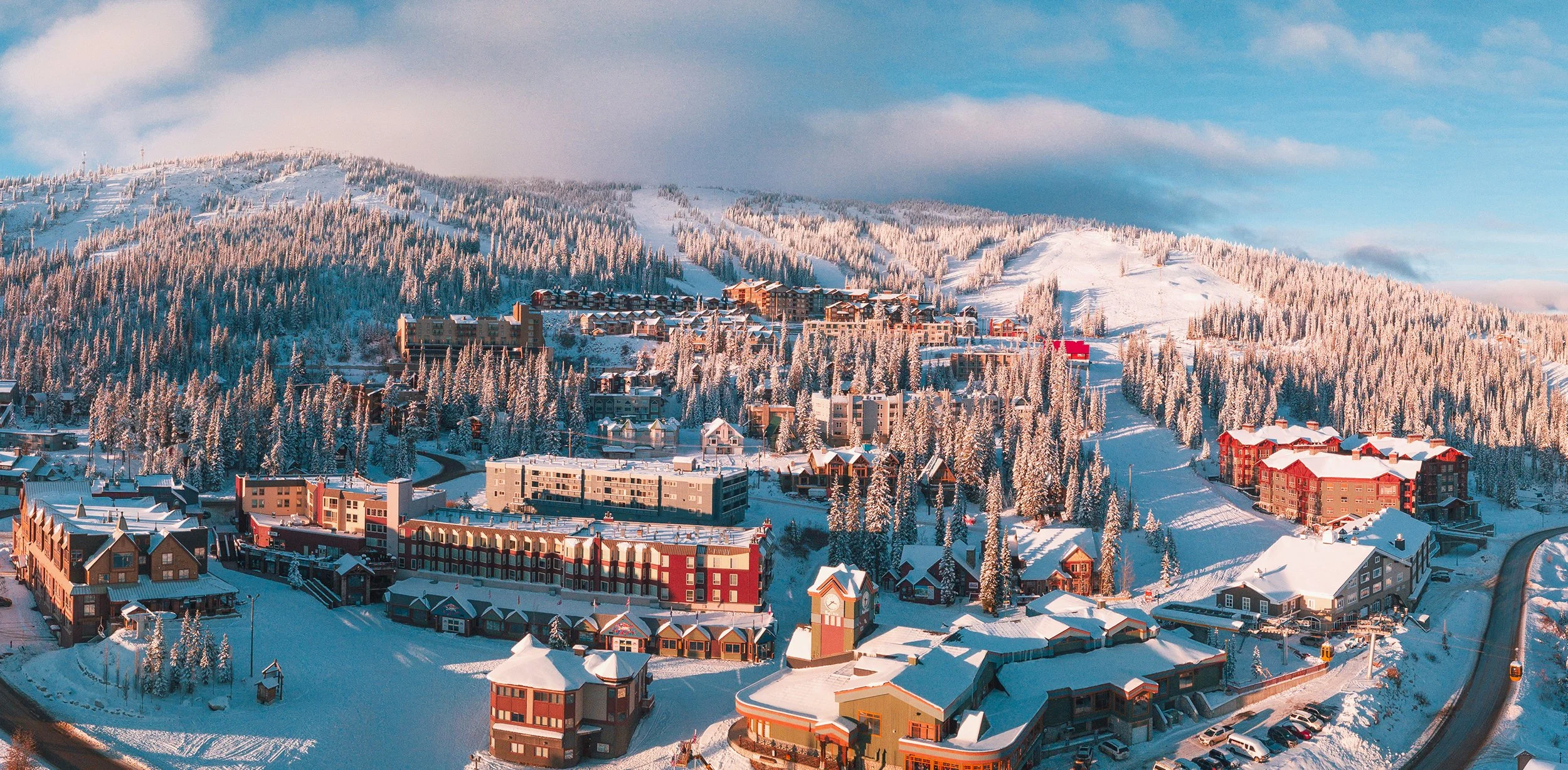





Residents across parts of the Kootenays could see smoke in the coming days as the BC Wildfire Service prepares to support six prescribed and ecosystem restoration burns across the Southeast Fire Centre.