RDCK proposes targeted OCP updates to align with existing housing zoning
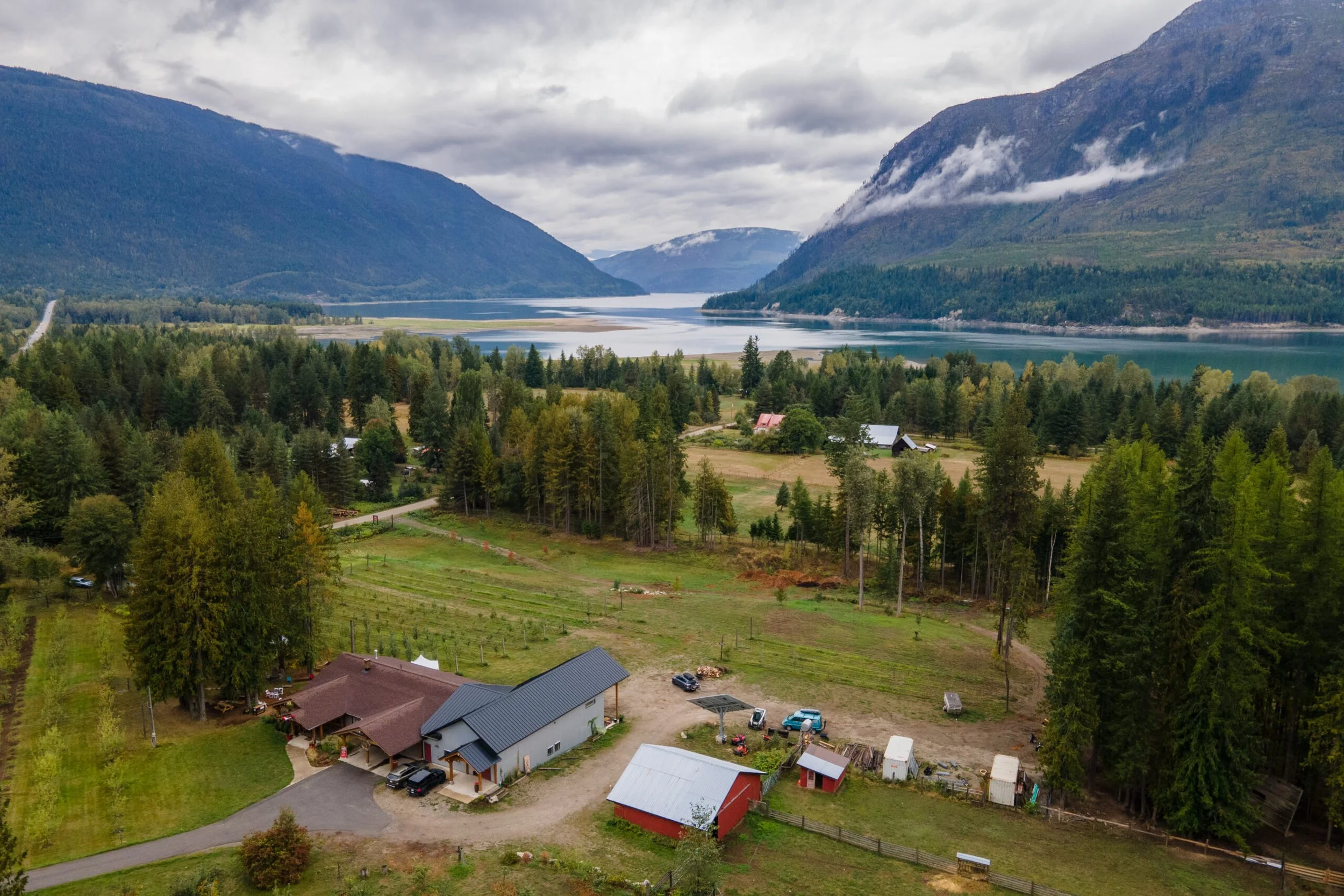
An aerial view of Upper Arrow Lake near Burton. The RDCK is proposing targeted updates to seven Official Community Plans and land-use bylaws to align them with residential zoning changes already adopted.
Photo credit: Dave Heath Photography / RDCK
NELSON — Rural property owners in seven Central Kootenay electoral areas could see changes to the language governing residential development in their Official Community Plans, but the Regional District of Central Kootenay says the project will not introduce any new zoning.
The RDCK is proposing targeted amendments in Electoral Areas A, B, C, F, G, J and K to bring existing OCP and land-use policy language into line with residential zoning changes already adopted in 2024 and 2026. The work follows provincial small-scale multi-unit housing legislation that required local governments to permit additional housing forms in many residential zones.
The RDCK changed its zoning bylaws in 2024 to comply with those requirements and made further residential zoning amendments in 2026. The latest project deals with policy documents that still contain older terminology, density formulas and minimum-lot-size provisions that no longer reflect how the zoning bylaws are written.
The regional district says the amendments are a targeted alignment exercise and are not a full rewrite of any OCP. No new zoning changes are being proposed through the project.
For property owners, the practical effect varies by electoral area. In some plans, the changes are largely about terminology. In others, older OCP provisions that spell out how many dwellings are allowed on a parcel or establish specific minimum lot sizes would be removed, with those regulatory details left to the applicable zoning bylaw.
Area J, covered by the Kootenay-Columbia Rivers OCP, contains some of the clearest examples. Current Suburban Residential policy includes a 2,000-square-metre minimum lot provision, while another policy contains a 700-square-metre minimum connected to sewer servicing. The proposed amendments would remove those fixed numbers from the OCP.
The plan also contains residential density formulas that would be deleted. Existing Country Residential policy allows one dwelling plus another dwelling for every hectare above one hectare, while Rural Residential policy allows an additional dwelling for every two additional hectares.
Those formulas would be removed from the OCP and replaced with policy supporting accessory dwelling units, while zoning bylaws would continue to determine the detailed density and use rules.
The Remote Residential designation in Area J would retain its two-hectare minimum lot size, but an OCP provision allowing an additional dwelling or duplex for every four additional hectares would be removed.
Area A would see similar changes. Existing policy setting a 2,000-square-metre minimum lot where community water is available, or 700 square metres where community sewer is available, would be replaced with language saying subdivision lot size should be determined by available or proposed servicing. Residential density formulas in Suburban, Country and Rural Residential designations would also be replaced with policies supporting accessory dwelling units, with the zoning bylaw carrying the detailed rules.
Area C would lose an OCP formula allowing one dwelling per parcel plus an additional dwelling for each hectare above one hectare. The replacement policy would support an accessory dwelling unit as an accessory use.
Other proposed amendments deal primarily with the terminology used to describe housing. References such as “single-family,” “one-family,” “two-family” and “multi-family” would be updated in several plans to terms including “single detached,” “duplex” and “multi-unit housing.”
Some references to carriage houses, garage suites, cottages or other accessory housing would also be standardized under the term “accessory dwelling unit.”
In Area B, those changes would affect policies covering communities including Erickson, Canyon, Lister, Rykert, Riverview and Huscroft. Existing requirements involving Agricultural Land Commission approval would remain in place.
Area G would receive similar terminology updates, while Area F would see references to carriage houses and multi-family development modernized. Area K’s changes are largely wording updates affecting terms such as single detached, duplex and multi-unit housing.
The amendments stem from changes to the Local Government Act introduced through B.C.’s small-scale multi-unit housing legislation. Those changes required many residential zones that previously allowed only a detached home to permit at least one additional dwelling unit, subject to exemptions and local servicing conditions.
Regional districts were required to update applicable zoning bylaws, while temporary provincial rules allowed those zoning changes to proceed even where they did not immediately conform with existing OCP language. That transition period ended Dec. 31, 2025, leaving the RDCK to bring the affected policy documents into alignment with zoning rules already in effect.
The RDCK also adopted additional residential zoning changes in 2026, including changes in Areas A, B and C to the way density is calculated on some larger properties. Staff said those changes could allow permitted density to be achieved without subdivision or rezoning in some circumstances while leaving the total allowable density on a property unchanged.
The current OCP project does not revisit those zoning decisions.
Consultation is underway. An Area A Advisory Planning and Heritage Commission meeting was held Sept. 21, while the Area B commission is scheduled to consider the proposal Sept. 29 at the Creston Valley Public Library, with online participation available.
Meetings for Areas C, G and J are expected later in the fall or winter, while the Rural Affairs Committee is expected to consider the amendments during the winter of 2026-27.
A public hearing is expected in winter or spring 2027 before any of the amendment bylaws can be adopted.
The RDCK is also consulting affected First Nations, agencies, school boards and other organizations as required or considered appropriate under the Local Government Act.
If the amendments proceed, the main change for many property owners will be in how residential policy is written and where detailed development rules are found. Zoning bylaws will continue to set key rules such as permitted uses, density and lot requirements, while servicing, environmental, development-permit and other applicable requirements will also continue to affect what can be developed on individual properties.
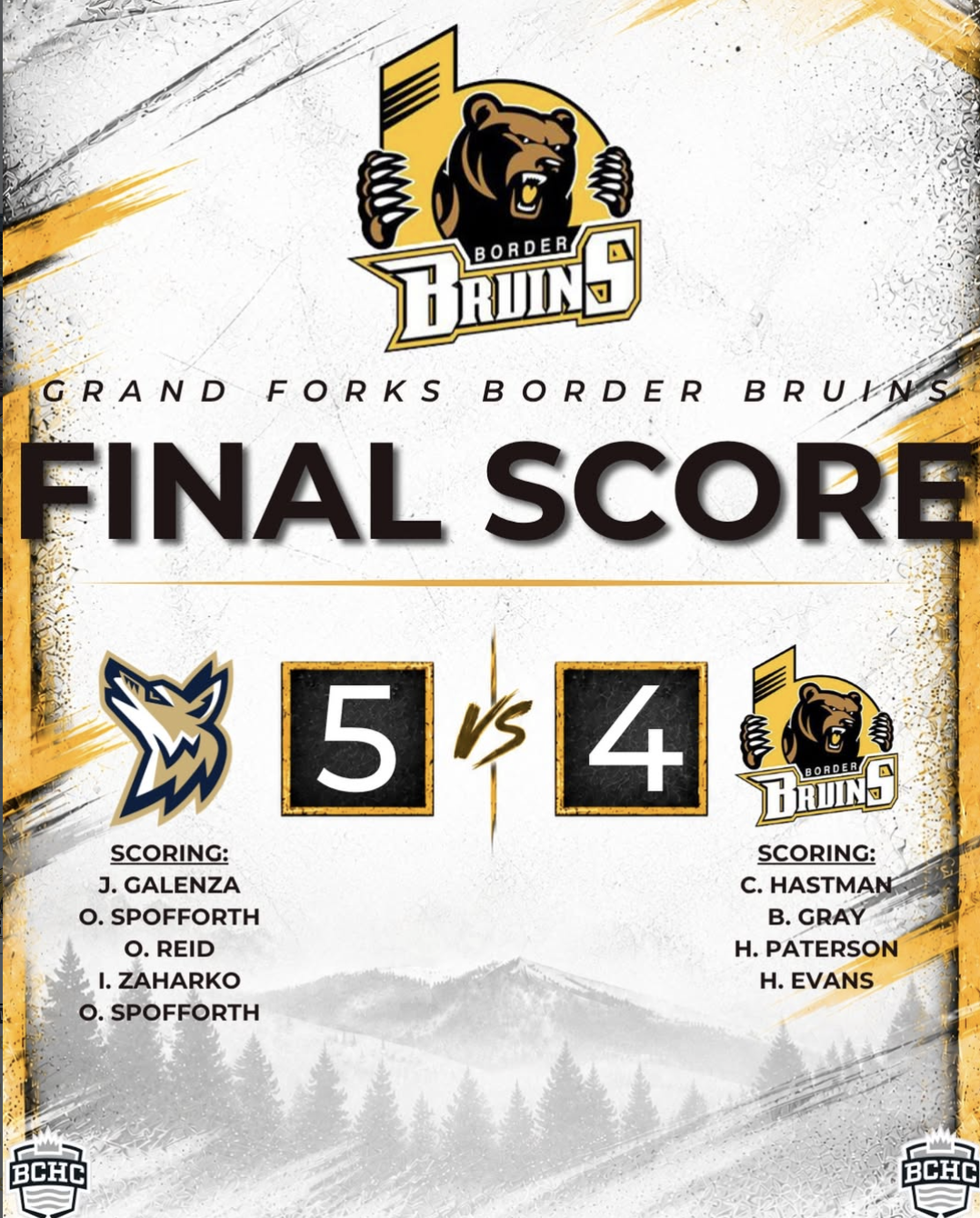








The Grand Forks Border Bruins came within a goal of their first British Columbia Hockey Conference victory Saturday, falling 5-4 to the Osoyoos Coyotes at Jack Goddard Memorial Arena.