‘We wouldn’t have made it out’: Horse rescuer warns wildfire evacuation starts long before an order
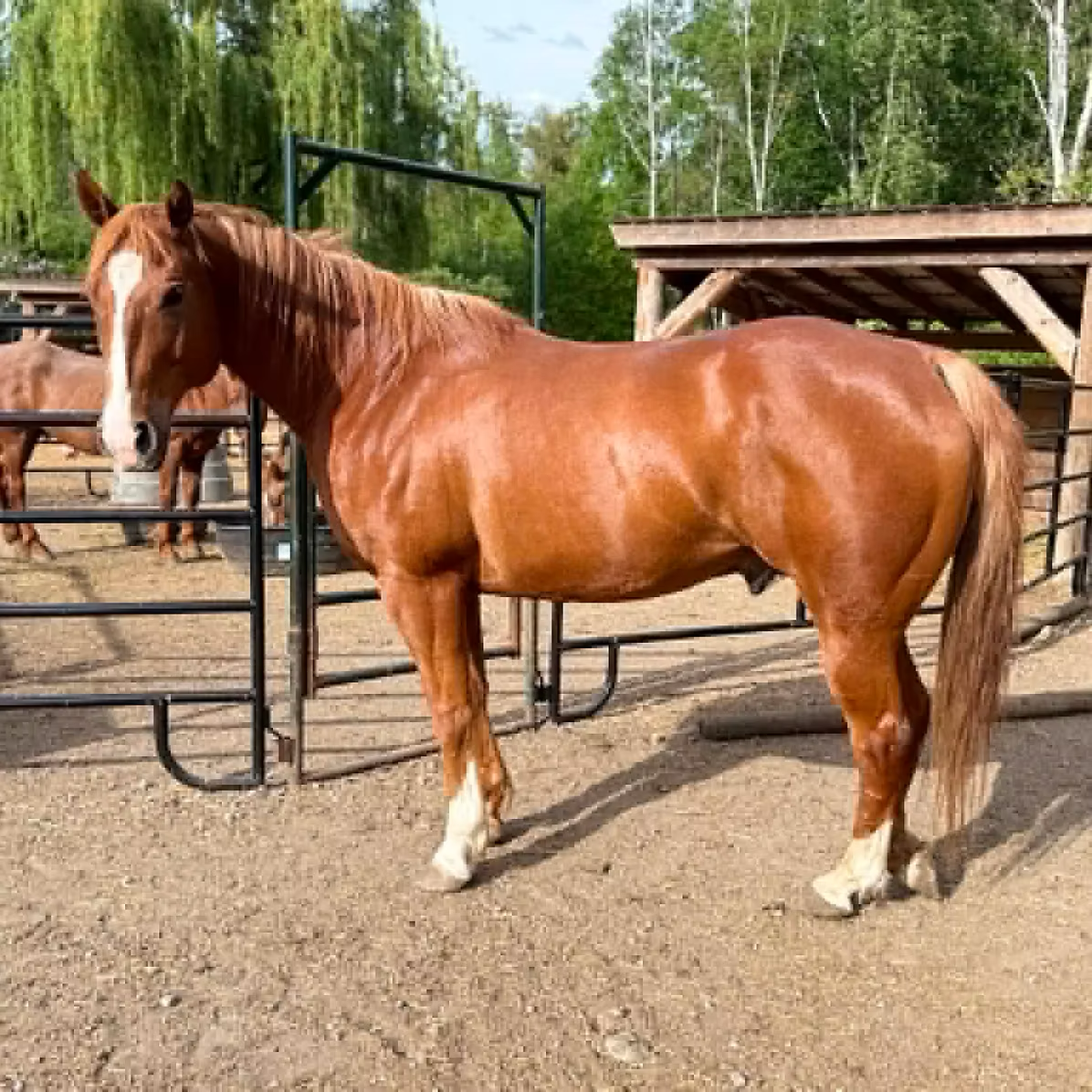
Captain Kidd, a five-year-old gelding in the care of Freedom’s Gate Equine Rescue, is gentle but cautious around people as he continues to build trust. Horses like Captain Kidd are among those the rescue would need to safely move if wildfire threatened the property, a process that can require extra time and careful handling.
Photo credit: Freedom's Gate Equine Rescue
OKANAGAN — In August 2023, as wildfires spread through the Shuswap in what would become the Bush Creek East wildfire, Carly Marchand decided to evacuate the horses at Freedom’s Gate Equine Rescue before anyone told her she had to leave.
The rescue had not been placed under an evacuation alert, but smoke had become heavy and ash was falling across the property, covering buildings and vehicles. By then, she said, the fire was close enough that waiting for an official notice no longer seemed realistic or responsible.
Freedom’s Gate is a Salmon Arm-based equine rescue that describes itself as a registered non-profit charitable society. Horses coming into its care are assessed and may receive veterinary care, rehabilitation, handling and training before eventually being placed for adoption. In 2023, Marchand said there were about sixteen horses at the rescue, including three large draft horses and three feral mares with foals.
Moving them was not simply a matter of hitching up one trailer and driving away. Some could be carried in conventional trailers; others required larger equipment and more careful handling. Two transport companies came with trailers capable of carrying the draft and feral horses, while Freedom’s Gate used its own trailer as well.
Marchand said six people were involved in the evacuation, which ultimately required five loads. Some of the transporters were coming from the Armstrong area, about forty-five minutes away, and each trip involved travelling to the rescue, loading horses, driving to the receiving property, unloading and settling them, then returning for another group. Marchand estimates that the process, from organizing the move to getting the horses settled, took about twenty-four hours.
That experience has shaped the way she thinks about wildfire evacuation ever since. Had Freedom’s Gate waited until an evacuation order was issued, she believes there would not have been enough time to move the animals safely. She had considered what she might do if the fire reached the property before the horses could be trailered out: load as many as possible, have someone else drive the trailer, mount one of the remaining horses and release the others in the hope they would follow.
“We wouldn’t have made it out,” she said of waiting until an order. “Not safely.”
The problem was not just the number of horses. Feral horses may have little reason to enter an enclosed trailer voluntarily, particularly when they are already agitated. Mares travelling with foals have to be transported with the safety of both animals in mind. Large draft horses can be too tall or too long for trailers designed for average-sized horses. Even ordinary horses can become difficult to catch or load, and a job that takes a few minutes under normal conditions can take considerably longer during an emergency.
Before the first horse leaves, someone also has to know where it is going. The receiving property needs enough space to separate animals where necessary, along with fencing, water, feed and a safe place to unload them. The truck needs fuel, the trailer has to be ready, routes need to be considered and enough people have to be available at both ends. If additional trailers are needed, their travel time to the property becomes part of the evacuation time as well.
As Marchand put it, people willing to help are not necessarily “sitting at the end of your driveway.”
Three years later, the current Bald Range wildfire has brought those concerns back for Marchand. The fire, which has prompted an evacuation order for the entire District of Summerland as well as orders in surrounding areas, developed rapidly as authorities expanded evacuations.
Marchand said she cannot speak to the circumstances of individual farms or rescues because she was not involved in their evacuations, but watching the fire unfold renewed a concern she has carried since 2023 — whether the timelines used for evacuation alerts leave enough time to move livestock safely.
British Columbia’s evacuation system distinguishes between an evacuation alert, when residents are expected to prepare to leave on short notice, and an evacuation order, when people must leave the affected area. For livestock owners, however, preparation can itself involve hours of work.
Marchand believes an alert should be treated as the point at which livestock begin leaving, not as the point at which an owner starts making arrangements. That approach is already reflected in some emergency guidance in B.C. During an evacuation alert issued for the Bradley Creek wildfire in the Shuswap this month, the Columbia Shuswap Regional District specifically advised agricultural producers that the alert stage was a good time to relocate livestock to a safe place and provided a contact number for those needing assistance.
She would like emergency planning to recognize that difference more explicitly. Municipalities and regional districts, she said, should identify places such as fairgrounds and rodeo grounds that can receive displaced livestock and make that information easy to find before an emergency occurs. She also believes livestock owners should receive earlier and more direct notice when fire conditions are deteriorating, particularly in rural areas where trailers, haulers and suitable receiving properties may be some distance away.
At the same time, she does not place responsibility solely on government. Freedom’s Gate begins preparing for wildfire season by late spring, she said, and she believes rescues and other facilities caring for animals should be held to a particularly high standard. They should know where their animals can go, how they will get there and who can help if the regular plan fails. Horse owners should also make trailer loading a routine part of training, even if they rarely intend to transport the animal.
Marchand has helped with other evacuations and has seen horses refuse to load while owners are already under pressure to leave. She has driven through active fire conditions to assist with animals and has been involved in efforts to return for horses that would not initially enter a trailer. Those experiences, she said, have reinforced how different a large-animal evacuation can be from moving people and household pets. “It’s not as easy as ‘just put your horse in the trailer and get out of there,’” she said.
That difference becomes particularly important as evacuation time gets shorter. A family may be able to gather documents, pets and a few belongings and leave in one vehicle. A farm may require several trailers, several drivers and repeated trips over the same roads before the people living there can turn their attention to their own evacuation. For Freedom’s Gate in 2023, that process took most of a day even though help was available, the horses had somewhere to go and the decision to start moving them was made before an official evacuation notice forced the issue.
Marchand does not think every part of that problem can be solved through government policy. Nor does she think owners can assume emergency responders will be able to solve it for them. Her experience has instead left her arguing for preparation on both sides: emergency systems that recognize how long livestock evacuation can take, and animal owners who make plans before ash is already falling on the property.
Learn more about the horses available for adoption at Freedom’s Gate here.
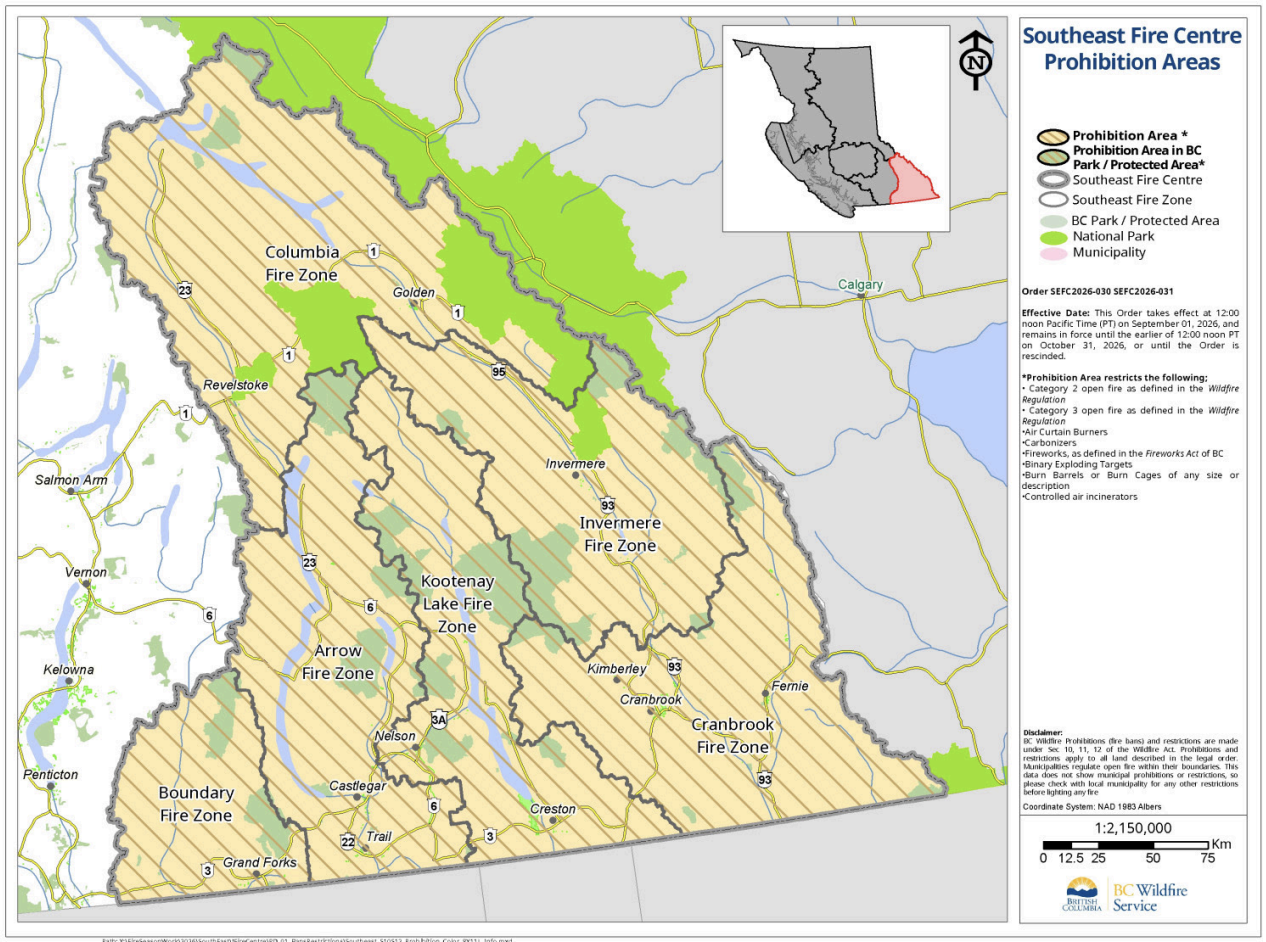
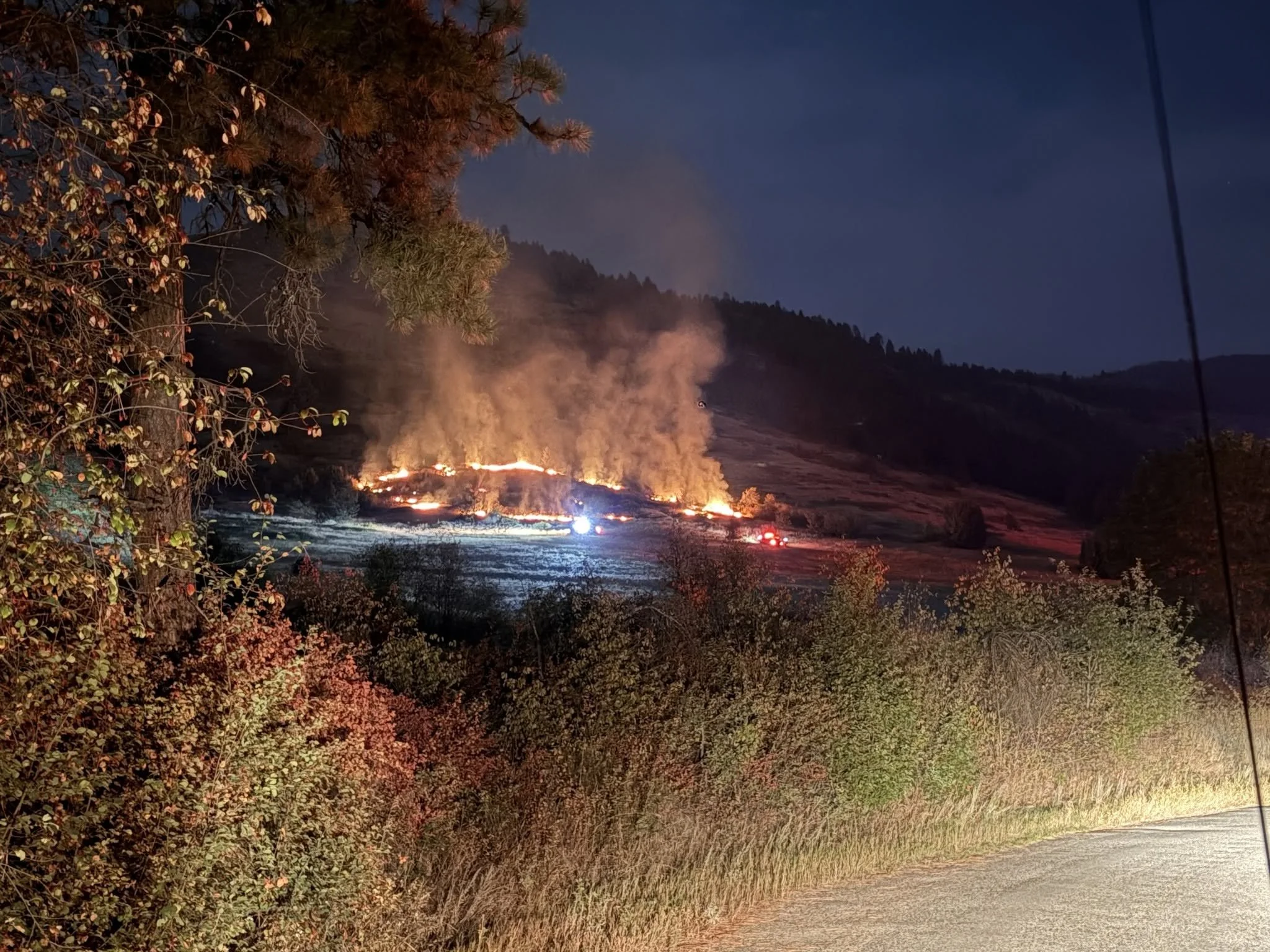

Residents across parts of the Kootenays could see smoke in the coming days as the BC Wildfire Service prepares to support six prescribed and ecosystem restoration burns across the Southeast Fire Centre.