Syilx Okanagan Nation calls for greater understanding of reconciliation and land rights
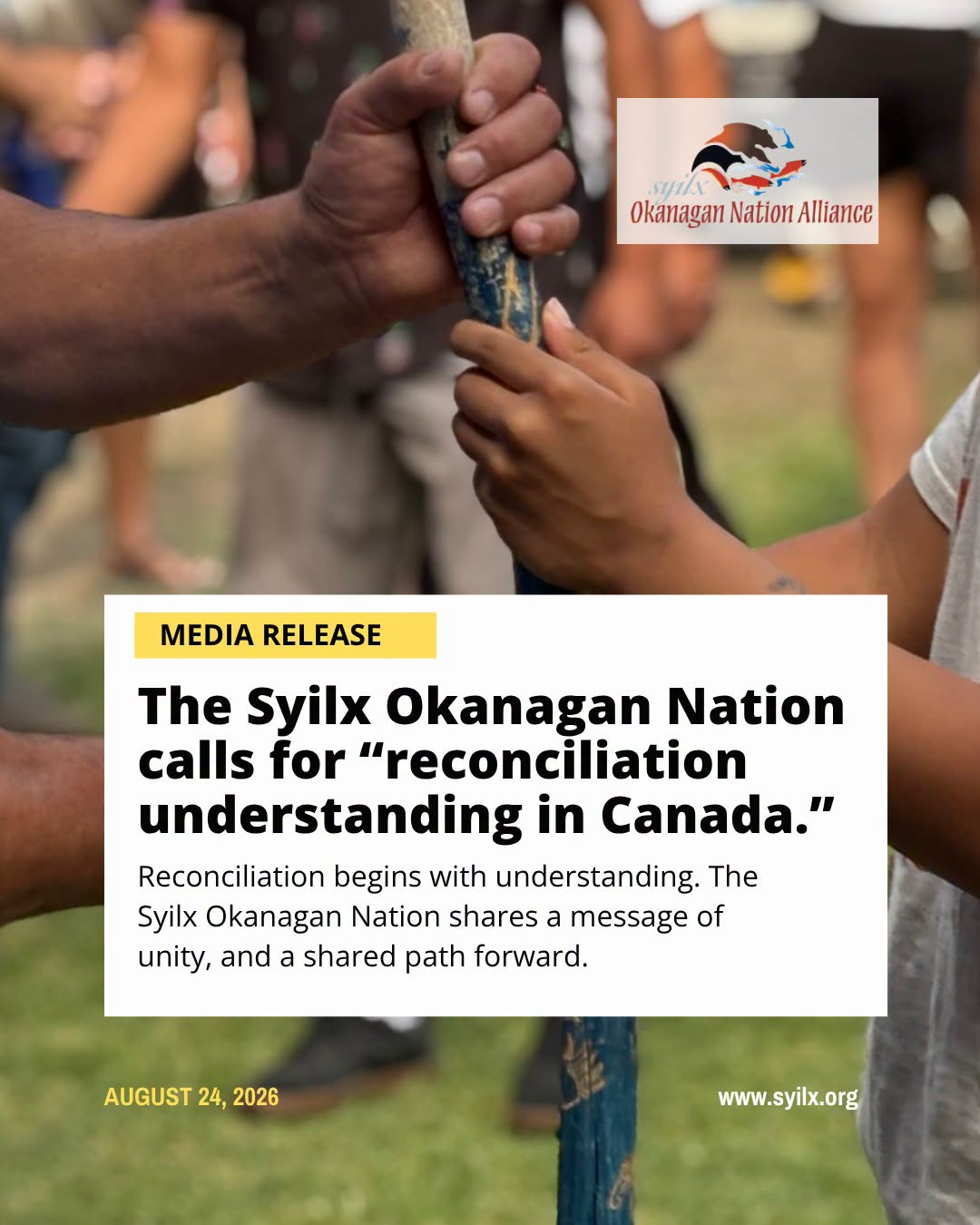
The Syilx Okanagan Nation issued a statement Aug. 24 calling for greater public understanding of reconciliation and the effect of negotiated agreements on private land ownership.
Image: Syilx Okanagan Nation.
The Syilx Okanagan Nation is calling for greater public understanding of reconciliation and agreements between First Nations and the provincial government, saying misconceptions about private land ownership are shaping some of the discussion taking place in British Columbia.
In a statement issued Aug. 24, the Nation said recent discussion about provincial efforts to settle claims with First Nations has contributed to a misconception that Indigenous nations want to extinguish existing private land titles. The Nation rejected that characterization and said the settlements it referenced do not appear to affect private ownership of land.
The Syilx Okanagan Nation also addressed modern treaties, describing them as constitutionally grounded and legally binding agreements intended to provide greater certainty over land. The federal government describes modern treaties as agreements that provide clarity and predictability around land rights, ownership and resource management, with treaty rights constitutionally protected under Section 35 of the Constitution Act, 1982.

The Nation expressed support for Premier David Eby and the provincial government's efforts to resolve potential disputes, while calling on residents, public servants and representatives of political parties to consider the social, cultural and economic dimensions of reconciliation. “Our Nations stand behind these efforts and look forward to forging ahead with peaceful resolutions for one and all,” the statement said.
The statement comes as one Syilx community, the Osoyoos Indian Band, is in the early stages of negotiating a reconciliation agreement with B.C. in the South Okanagan. The Osoyoos Indian Band is one of the member communities of the Syilx Okanagan Nation, which describes itself as trans-boundary, with seven member communities in British Columbia and the Colville Confederated Tribes in northern Washington state.
B.C. announced the beginning of negotiations with the Osoyoos Indian Band on July 7. The proposed agreement is intended to support economic opportunities and sustainable land management while addressing additional land priorities in the South Okanagan, including the possible return of some Crown land within the band's historic reserve and areas containing important cultural and spiritual sites.
No decisions have been made about specific lands, and the province says any parcels proposed through the current process will be selected from Crown land. Private-property rights are protected throughout the negotiations, according to the province, and privately owned land would only be available if an owner chose to sell and there was a willing buyer. Existing uses and interests, including recreation, ranching, tenures and access routes, are also to be reviewed before decisions are made.
The negotiations are currently at the second stage of B.C.'s six-step land-transfer process. At this stage, the province conducts research and reviews while beginning consultation and engagement with First Nations, tenure holders and other interested parties, with land options refined later before the province makes a formal land offer.
Public engagement is also planned. B.C. says an open house and online survey will be used to gather information about existing land uses, community concerns and opportunities that should be considered during negotiations. As of Aug. 30, the provincial engagement site continued to list that engagement as upcoming.
B.C. describes the current Osoyoos process as a reconciliation agreement. The province says negotiated agreements can clarify land use, jurisdiction and decision-making responsibilities, while reconciliation agreements elsewhere in B.C. have also addressed economic opportunities and stewardship. Modern treaties are agreements involving Indigenous Nations and Crown governments, and the rights defined in them are constitutionally protected under Section 35.
The Aug. 24 Syilx statement does not identify the Osoyoos negotiations, or any particular court case, as the reason for its message. It was released amid an ongoing provincial discussion about Aboriginal title, private property and negotiated reconciliation following a B.C. Supreme Court decision involving the Cowichan Nation.
In 2025, the court recognized Cowichan Aboriginal title to the Cowichan village site at Tl’utqinus, located in what is now Richmond. The provincial government appealed the decision, with Attorney General Niki Sharma saying it raised significant legal issues and could have significant unintended consequences for fee-simple private-property rights.
In a joint statement issued March 2, B.C. and the Cowichan Nation said they were in negotiations and that both parties were proceeding with appeals to the B.C. Court of Appeal. They also said the Cowichan Nation had not sought to invalidate privately held fee-simple titles and that neither the Nation nor the province was seeking to invalidate those titles through the negotiations or appeals.
Questions of land and reconciliation within the Syilx Okanagan Nation also have a much longer history. The Nation says Syilx people, including Sinixt, have lived throughout their territory for thousands of years, travelling, hunting, fishing, growing, harvesting and trading across the land.
In 1846, the international boundary that now separates Canada and the United States was drawn through Syilx territory, separating lands and families. As settlement increased in what is now British Columbia, reserves were eventually established in the early 1900s, and the Nation's historical account says Syilx people opposed their establishment without a treaty first being negotiated.
The Syilx Okanagan Nation said its current call for understanding is grounded in the goal of finding peaceful resolutions and building greater public understanding of reconciliation.
“If our generations are together in this sacred and transformational journey, we must embrace our separate paths to a better understanding of where we will exist in harmony and prosperity for all British Columbians,” the Nation said.


Osoyoos has begun the formal process of dismantling its Near Market Affordable Housing program after 10 homes were sold through the program over roughly a decade, with the Town citing administrative demands and questions about its effectiveness.