As wildfires grow more extreme, how much protection can fuel treatment buy?
The Boundary is investing in thinning, prescribed fire and fuel breaks around its communities. Research shows those treatments can make a major difference — but their effectiveness depends on how they are built, the conditions when wildfire arrives and what happens as forests grow back.
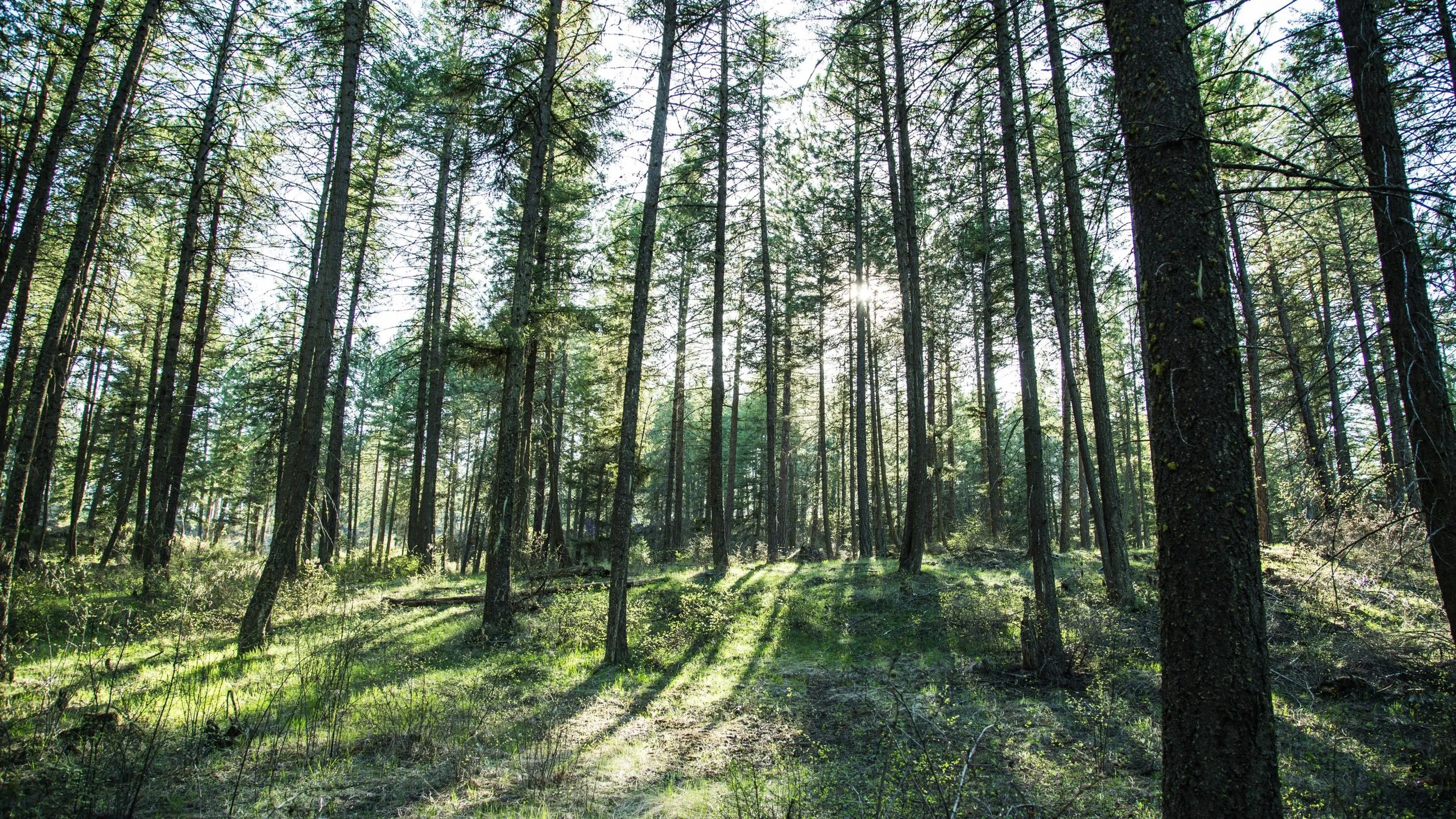
Thinning can reduce wildfire fuels by increasing spacing between trees and removing smaller vegetation that can carry fire into the forest canopy. Fuel treatments are being used across the Boundary to create more defensible space and reduce potential fire intensity.
Photo: Dan Macmaster (FESBC)
CHRISTINA LAKE — A multi-phase wildfire mitigation project launched in fall 2024 in a forested park near Christina Lake homes has involved removing ladder fuels, pruning trees and reducing combustible material on the forest floor.
The Regional District of Kootenay Boundary says the work in Christina Lake Community Nature Park is intended to create defensible space for firefighters and slow a wildfire before it reaches nearby homes. Once completed, the district has described the treated areas as “organic brake pedals” for an approaching fire. A low-intensity prescribed burn of the eastern half of the park is anticipated for fall 2026 if weather and fuel-moisture conditions are suitable.
Similar work is being planned elsewhere in the region. An RDKB project involves developing and implementing fuel-management prescriptions for approximately 154 hectares in and around Greenwood, Trail, Warfield and Montrose. Greenwood accounts for about 94 hectares of that total.
Proposed treatments include pruning, reducing small and surface fuels, burning debris piles and potentially using prescribed fire. The RDKB says one intended result is to create areas firefighters can more safely access and use during suppression.
The objective is not to make a forest fireproof. It is to change the conditions a wildfire encounters but Canada's changing climate is making that challenge harder.
A World Weather Attribution analysis released Aug. 6 found that human-caused climate change substantially increased the likelihood of the extreme fire-weather conditions researchers examined in parts of Canada during the 2026 season.
The quantitative attribution work focused on Ontario and the Northwest Territories, not British Columbia. Combining weather observations with climate models, researchers estimated the conditions examined were made about five times more likely for one seven-day Northwest Territories measure, and about twice as likely for the longer Northwest Territories event and the Ontario events.
The WWA analysis did not test fuel treatments themselves. In discussing adaptation, however, the researchers pointed to a growing problem.
As fires become more frequent, larger and more intense, they said, fuel-reduction measures become less effective and fires increasingly difficult to control. Their recommendations extend beyond fuel treatment to forest resilience, early-warning systems, land-use planning and incorporating First Nations knowledge and experience into wildfire preparedness and response.
For rural communities already spending money to change the forests around them, that leaves an increasingly important question:
How much protection does a fuel treatment actually buy?

Changing the fire rather than stopping it
Fuel treatments can remove smaller trees that carry flames upward, reduce the continuity of fuels through a stand and deal with combustible material left on or near the forest floor.
The aim can be to reduce the likelihood of a fire moving into the tree crowns, reduce its intensity or give firefighters a more defensible place from which to work.
Research from southeastern British Columbia supports much of that logic.
A 2025 study published in the International Journal of Wildland Fire examined operational fuel treatments in five community forests in the Kootenay–Boundary Natural Resource Region: Creston, Harrop–Procter, Kaslo and District, Nakusp and Area, and the Slocan Integral Forestry Cooperative.
Researchers measured forest stands before and after treatments carried out in 2021 and 2022 and then modelled potential fire behaviour and effects.
They found that lower-intensity thinning reduced the modelled potential for passive crown fire, in which individual trees or groups of trees ignite. Higher-intensity thinning reduced the modelled potential for both passive and active crown fire.
How debris from the thinning was handled also mattered. Pile burning or chipping the remaining material reduced the modelled potential for passive crown fire, although the researchers identified concerns about some fire effects associated with chipped fuels.
The study also draws an important distinction between treatment efficacy and treatment effectiveness.
Efficacy describes how a treatment performs in modelling under specified weather conditions. Effectiveness asks whether it actually changed fire behaviour as intended when a real wildfire eventually crossed the treated area.
That distinction matters in the Boundary.
A treatment can be designed to reduce expected fire behaviour. The ultimate test comes when wildfire arrives.
Extreme conditions don't necessarily erase the benefit
Severe fire weather does not automatically render a fuel treatment ineffective.
A 2024 study involving U.S. Forest Service researchers examined a 1,200-hectare randomized forest experiment that was later almost entirely burned by wildfire.
Researchers were able to compare untreated forest with areas that had previously been thinned, burned or subjected to combinations of treatments under a wide range of fire-weather conditions.
The combination of thinning and prescribed fire produced the lowest fire severity across all four measures researchers examined, while the untreated forest had the highest.
The difference remained even though 20 years had passed since the mechanical thinning and 10 years since the second prescribed-fire treatment.
The results were not identical under every kind of extreme weather. Treatment effectiveness could decline under the most severe conditions for measures associated with tree mortality, while benefits associated with limiting crown-fire behaviour could be greatest under severe fire weather.
Researchers nevertheless concluded there was strong evidence that fuel treatments can reduce fire behaviour and resulting severity even during extreme fire-weather conditions.
There is Canadian case-study evidence as well.
FPInnovations has examined what happened when the 2021 White Rock Lake wildfire reached a fuel-treated forest near Westshore Estates in the North Okanagan. Its case study describes the encounter as an example of high-intensity fire spread being moderated in fuel-reduced forest stands. The report is also included in BC Wildfire Service's fuel-management reference collection.
Closer to home, BC Wildfire Service announced in September 2025 that it was supporting the Selkirk Resource District Wildfire Risk Reduction program in conducting a prescribed burn of up to 15.5 hectares in the Swanson Road area of Christina Lake.
The stated objectives included reducing accumulations of dead wood and other combustible material, delaying competing vegetation and decreasing the risk of future catastrophic wildfire.
Protection that grows back
There is another complication: treatment changes a living forest.
Vegetation grows. Branches fall. Dead material accumulates. Surface and understory fuels can return.
A 2024 meta-analysis of conifer-dominated forests in the western United States examined how thinning, prescribed fire and previous wildfire affected the severity of subsequent fires.
Researchers found overwhelming evidence that thinning combined with prescribed burning, thinning combined with pile burning and prescribed burning on its own reduced subsequent wildfire severity. Those treatment types produced average reductions of between 62 and 72 per cent compared with untreated areas.
Thinning by itself was less effective, underscoring the importance of also dealing with surface fuels.
But the effects weakened with time.
After 10 years, the average reduction in subsequent wildfire severity had declined by more than half. Thinning combined with prescribed fire was the only treatment category that continued to show a statistically significant reduction after 10 years, averaging 49 per cent lower severity than untreated forest.
Those results come from forests in the western United States and should not be interpreted as a 10-year lifespan for a Christina Lake or Greenwood treatment.
They do illustrate a basic problem facing governments treating forests as part of community wildfire protection: unlike a road, water line or concrete building, the asset changes after it is constructed.
The RDKB already acknowledges that reality.
Its Christina Lake project information says regular maintenance and prescribed fire will likely become ongoing, seasonal practices as the region adapts to hotter, drier summers.
That shifts the question from the cost of carrying out the first treatment to the cost of maintaining its effectiveness.
How frequently will Christina Lake's treated forest need another intervention? What measurements will determine when it is needed? Who will be responsible for paying for it five, 10 or 20 years from now?
And what happens if future fire weather exceeds the conditions under which the treatment was designed?
More than $1.1 million for West Boundary projects
Those questions are not hypothetical in the West Boundary.
In 2022, West Boundary Community Forest received $1,137,375 from the Forest Enhancement Society of BC for five wildfire-risk-reduction projects: Myers Creek Road, Fiva Creek, Greenwood East, Lone Star Border and Rock Creek South.
The projects were designed to address different wildfire risks, and by July 2023 work was underway across the program.
At Myers Creek Road behind Midway, a shaded fuel break had been developed to help protect the community from wildfire spreading from the south. At Fiva Creek north of Westbridge, thinning and chipping had been carried out on a dense hillside near homes.
Work had also taken place on the Greenwood fuel break, while hand piling and pruning were underway at Rock Creek South, where dense fuels and beetle-killed trees had been identified near the community.
The Lone Star Border project west of Grand Forks was intended to create a fuel break that could both reduce fire spread and improve access for suppression crews. At the time of the July 2023 update, that work was still described largely as upcoming.
WBCF said fuel measurements and other data had been collected to develop wildfire-risk-reduction prescriptions, while the Osoyoos Indian Band was to be involved throughout the prescription process.
Nearly four years after the funding was announced — and about three years after FESBC reported work underway across the five projects — they also point toward a longer-term question.
Once governments have paid to reduce wildfire fuels around a community, who measures how quickly the benefit is declining, when is another treatment required, and who pays when the work has to be done again?
A wider adaptation problem
The World Weather Attribution analysis does not argue that fuel treatment should be abandoned.
Instead, its findings point toward the limits of relying on any single wildfire-protection tool as the climate warms.
Researchers called for an integrated approach that can include accounting for future wildfire risk in forestry decisions, building more resilient forests after fires, strengthening early-warning systems, using wildfire risk in land-use and development decisions and incorporating First Nations knowledge and experience.
The same multi-tool approach is already visible in the RDKB.
The district describes wildfire resiliency as involving landscape-level planning, thinning, pruning, prescribed fire, fuel-free areas and FireSmart work around individual properties rather than a single treatment used everywhere.
For communities surrounded by forest, fuel treatments will remain one part of that defence.
Research indicates they can substantially change how wildfire behaves and can continue providing benefits even under severe fire weather.
But they are not permanent, and they are not unlimited.
At Christina Lake, Greenwood and elsewhere in the Boundary, the next question is therefore not simply whether wildfire mitigation “works.”
It is what level of fire each treatment was built to handle, how long that protection is expected to last, how its effectiveness will be measured — and whether governments are prepared to keep paying for the work required to maintain it as the climate continues to change.
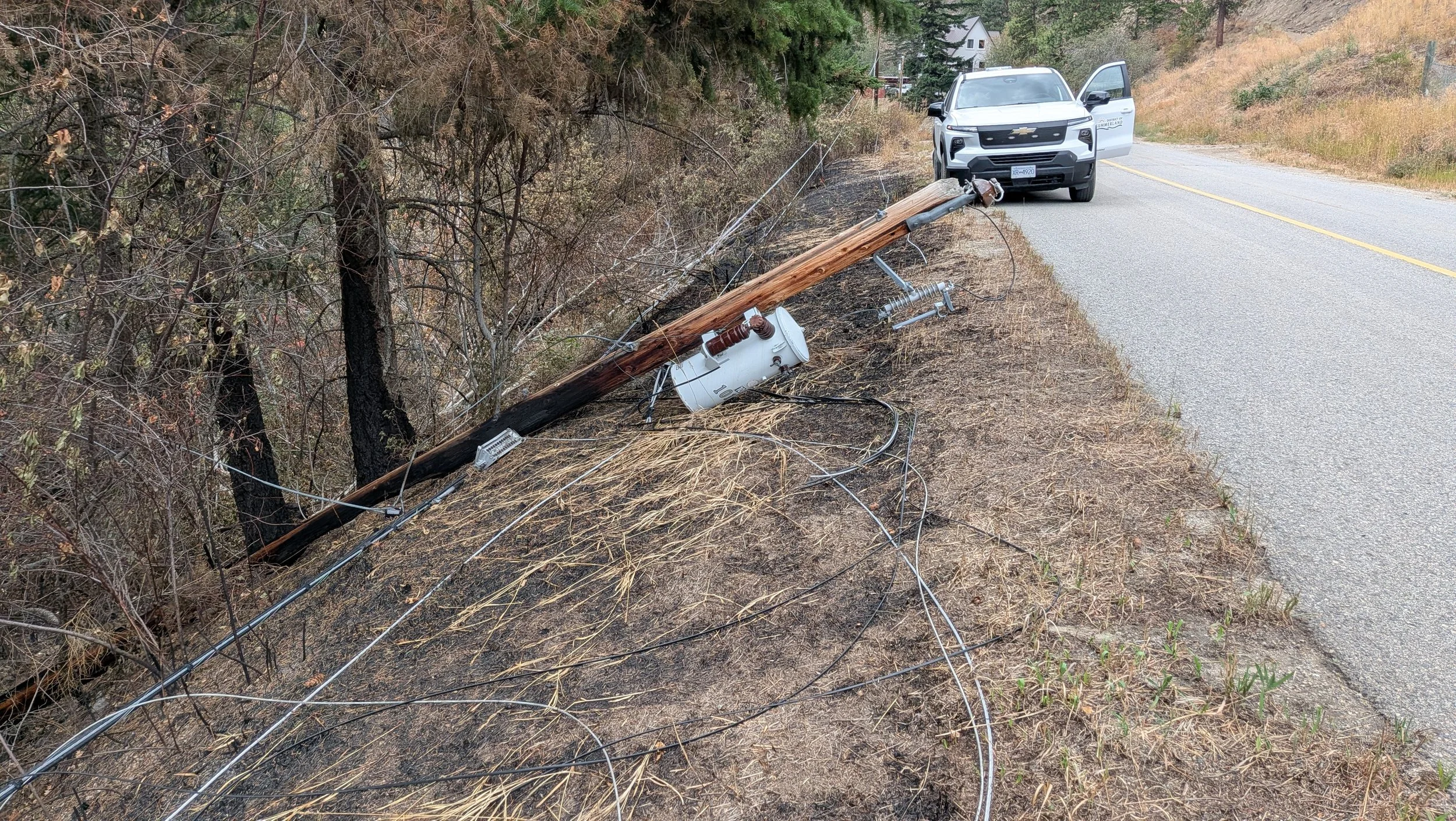




Property owners and their designated representatives can enter specific Bald Range wildfire-affected properties under a Prohibit Entry Order, while general visiting and occupancy remain prohibited as post-fire hazards and recovery work continue.