University RCMP adds low-frequency sirens drivers can feel
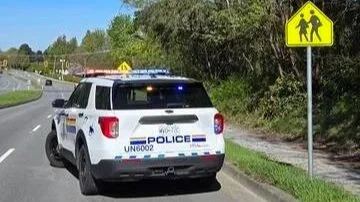
A University RCMP police vehicle travels through the University Endowment Lands. The detachment has introduced low-frequency emergency sirens designed to be felt as well as heard.
Photo: University RCMP
University RCMP has introduced low-frequency emergency sirens to its police vehicle fleet, giving officers another way to alert drivers, cyclists and pedestrians who may not hear a conventional siren.
The detachment said the system works alongside standard emergency sirens and produces a deeper tone and vibration that can be both heard and felt.
RCMP said the technology is intended to improve awareness among people who might otherwise miss an approaching emergency vehicle because of vehicle soundproofing, headphones or other distractions.
The system is being introduced in the University RCMP service area, which includes the University of British Columbia’s Vancouver campus, the University Endowment Lands and Pacific Spirit Regional Park.
RCMP said the area has a high volume of pedestrians, cyclists, students and motorists sharing the roadway.
While the equipment is new to University RCMP, low-frequency emergency sirens have previously been used by other police agencies in British Columbia.
The Vancouver Police Department reported in its 2013 annual report that its new patrol fleet included a low-frequency secondary siren system. The department said the sound could penetrate solid materials and be felt as well as heard.
Richmond RCMP also tested low-frequency “rumbler” sirens on a number of police vehicles in 2014, according to City of Richmond records. The system produced low-frequency bass vibrations in conjunction with traditional emergency lights and sirens.
University RCMP’s Sept. 11 release does not say how many vehicles are being equipped, what the installations cost or whether the technology will eventually be added across the fleet.
Under B.C.’s Motor Vehicle Act, drivers must yield to an approaching emergency vehicle using an audible warning device and flashing lights by moving as close as possible to the nearest edge or curb of the roadway, stopping clear of intersections and remaining stopped until the emergency vehicle has passed.
University RCMP said the low-frequency system is intended to help road users identify approaching emergency vehicles sooner.





A historic mine opening near Rossland’s Kootenay Columbia Trail will be permanently sealed, with a three-week trail closure beginning Sept. 28 so crews can complete the work.