RDCK approves $79,851 groundwater study in Goat River watershed
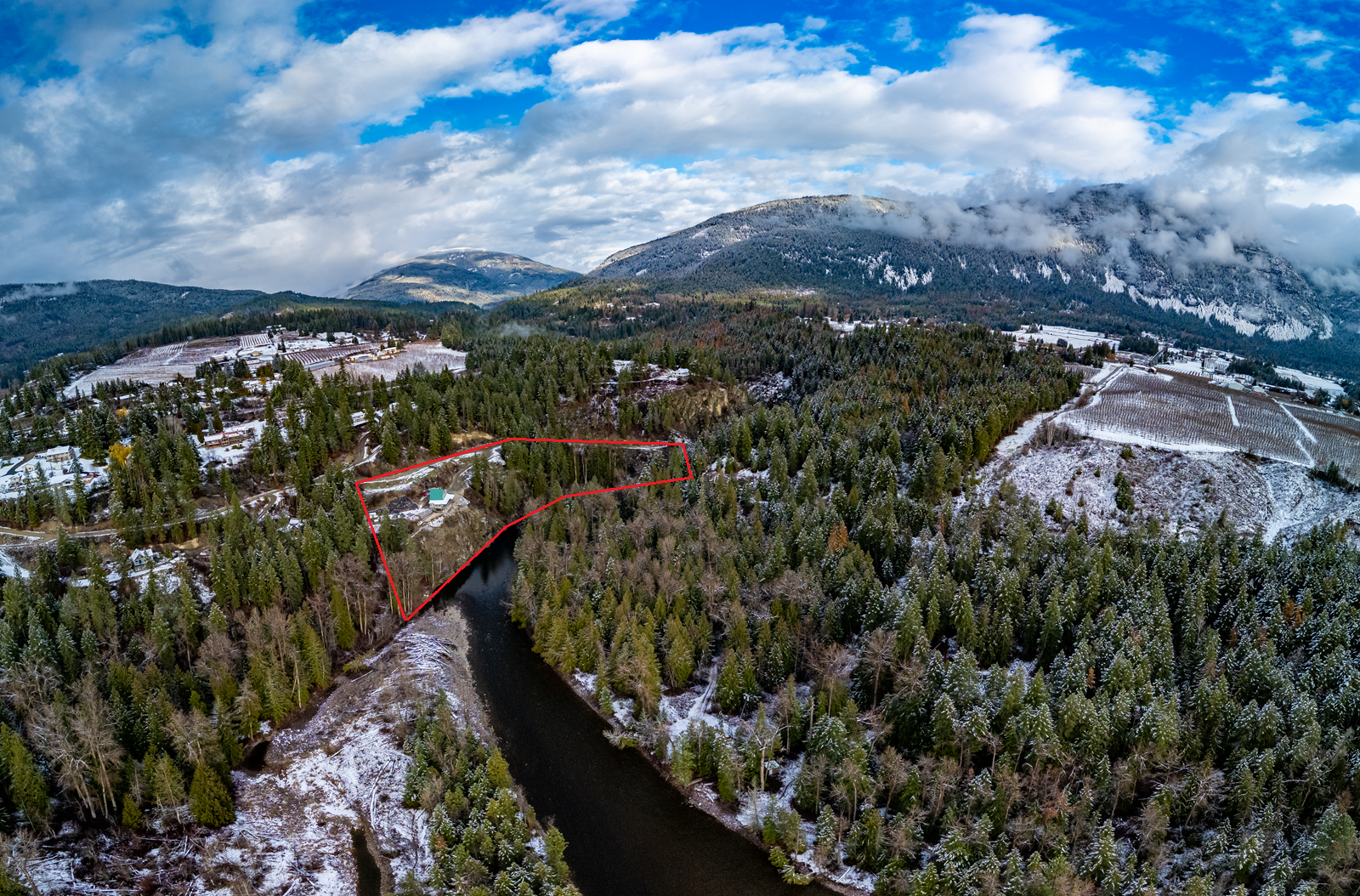
The Goat River winds through the Creston Valley beside the 3823 Goat Canyon Road property, outlined in red. The RDCK has approved a $79,851 study examining connections between groundwater and surface water in the Goat River watershed.
Photo: BC Parks Foundation/RDCK
The Regional District of Central Kootenay has approved a $79,851 study examining how groundwater beneath the Goat River watershed is connected to streams and other surface water.
The RDCK board approved a consulting agreement with Western Water Associates Ltd. at its Aug. 20 meeting. The preliminary hydraulic-connectivity assessment is scheduled to run from August 2026 through March 2028.
The work will examine the relationship between a deeper bedrock aquifer and surface water in a watershed where several streams and two shallow aquifers already carry provincial water-allocation notations indicating potential concerns about water availability.
According to the RDCK, the project will include a three-dimensional model of underground water layers and water-sample testing intended to help determine how water moves through the watershed.
Where an aquifer and a stream are hydraulically connected, groundwater pumping can reduce streamflow. Provincial water-licensing decisions take that connection into account when considering environmental flow needs, existing water rights and the availability of water for further allocation.
Similar questions have already been examined elsewhere in the Creston area.
A 2023 assessment prepared by Western Water Associates for the B.C. government looked at Aquifer 489 on the east side of the Kootenay River valley near Creston.
The assessment identified a potential hydraulic connection between the eastern portion of Aquifer 489 and Floyd and Camp Run creeks. It found that, if that connection is confirmed, no additional groundwater would be available for allocation in that part of the aquifer except in June under the assessment method used.
The new study comes as water availability remains a larger planning issue across the Goat River watershed.
RDCK planning material shows the Goat River fell to 2.5 cubic metres per second in September 2025, which the regional district described as the lowest recorded flow in records dating to 1919. The RDCK has said flows at that level can reduce aquatic habitat and increase pressure on the river ecosystem.
Residents and agricultural producers have also reported changes in local water conditions through the RDCK’s watershed engagement process.
A June engagement report found that 128 of 220 survey respondents were very concerned about local water sustainability, while another 62 were somewhat concerned. Seventy-six per cent said they had observed either significant or minor changes in local water conditions.
Reported observations included lower river levels, drying creeks and springs and reduced well productivity.
Agricultural producers also raised concerns about the timing of water availability. The RDCK reported that water can be more readily available in spring, while irrigation demand peaks in July and August, when late-season flows have been declining.
The Goat River watershed planning area includes Creston, Canyon, Erickson, Kitchener, Lister, West Creston, Wynndel and yaqan nuʔkiy. It also includes Arrow Creek, Duck Creek, part of the Creston Flats and areas extending south toward the Canada-U.S. border.
Water management in the area involves several governments and local water providers. The province is responsible for water licensing and allocation under the Water Sustainability Act, while the RDCK has responsibilities related to regional planning, infrastructure and water services. Irrigation and improvement districts also operate local systems.
The RDCK, yaqan nuʔkiy and the B.C. government formed the Collective Conversations Working Group this year to develop recommendations on longer-term water issues in the watershed.
The group held its first meeting May 28 in Creston and is working toward joint recommendations by October. Final decision-making authority remains with each government.
The groundwater study will continue beyond that process, with completion scheduled for March 2028.
The next public event connected with the watershed project is the Goat River Watershed Celebration, scheduled for Sept. 27 from noon to 4 p.m. at the Creston and District Community Complex.
The free BC Rivers Day event will include a three-dimensional watershed model and information from participating community organizations.

A historic mine opening near Rossland’s Kootenay Columbia Trail will be permanently sealed, with a three-week trail closure beginning Sept. 28 so crews can complete the work.