Castlegar fishout targets invasive predators in Columbia River
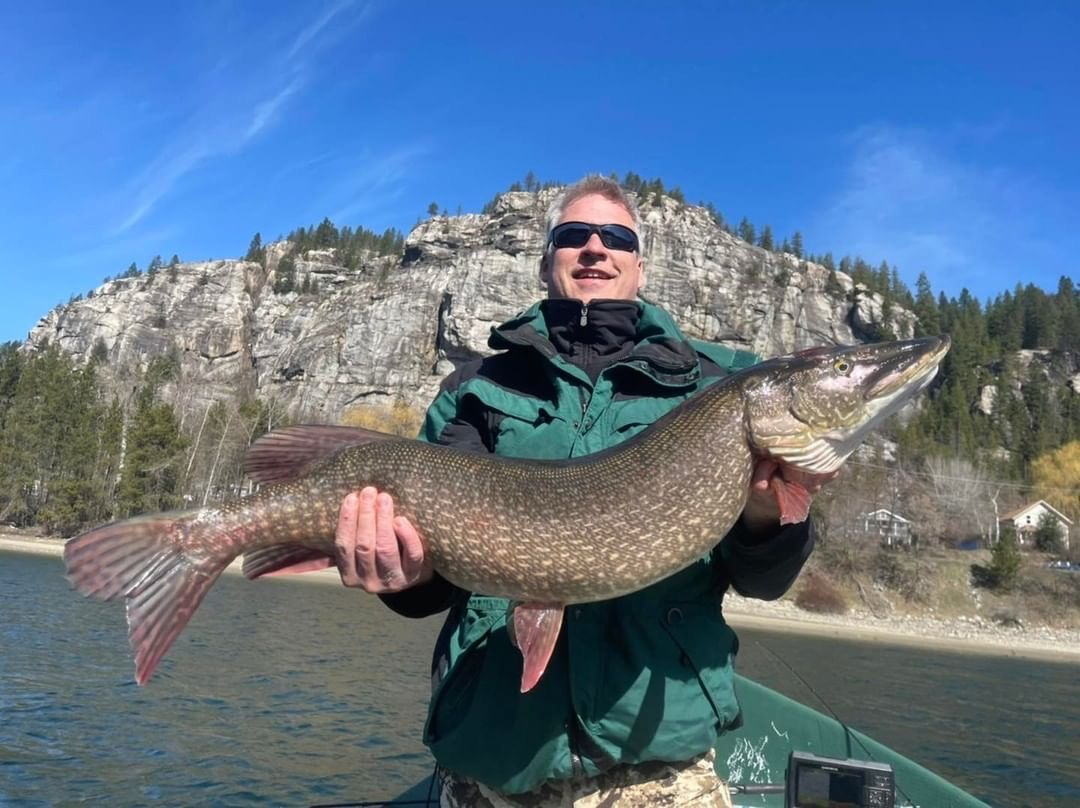
A northern pike caught on the Columbia River. Northern pike are targeted by suppression efforts in the Columbia system.
Photo via Destination Castlegar.
Northern pike suppression continues in the Columbia system, while Christina Lake remains at high risk of establishment
Anglers taking part in the 2026 Castlegar Invasive Fish Out were required to kill every walleye and northern pike they entered as efforts continue to reduce introduced predatory fish in the Columbia River system.
The derby ran from Aug. 14 to 23, covering the Columbia River below Hugh Keenleyside Dam and connected sections of the Kootenay and Pend d’Oreille rivers. The event offered $3,250 in prizes and targeted walleye and northern pike.
Under the rules, anglers submitted photographs showing the length of each fish through the MyCatch app, followed by a second photograph confirming that the fish had been dispatched.
Ryan Mitchell recorded the longest walleye at 67.95 centimetres, followed by Chris Joseph at 66.04 centimetres and Ross Zeleznik at 64.14 centimetres. Zeleznik also won the category based on the combined length of an angler’s 10 longest walleye.
The event coincides with a broader northern pike suppression effort in the Columbia Basin. B.C.’s current freshwater fishing regulations allow anglers to keep up to 16 walleye a day from Hugh Keenleyside Dam to the Washington state border, while the northern pike quota is unlimited in that section of the Columbia and in specified connected sections of the Kootenay and Pend d’Oreille rivers.
The Okanagan Nation Alliance launched a northern pike suppression program in 2018 and continues to carry out suppression and monitoring work in the Upper Columbia system. Its 2024-25 annual report says northern pike capture numbers appear to be declining, although continued suppression and monitoring remain part of the program.
Northern pike are large predatory fish that can have significant effects on native aquatic species. The Okanagan Nation Alliance says a large adult female can produce upwards of a quarter-million eggs in a year, adding to concerns about the species becoming established in new waters.
The Nation Alliance has also documented northern pike moving farther downstream through the Columbia system and has asked anglers to report catches from the Columbia, Pend d’Oreille, Kootenay and Kettle rivers as part of detection efforts.
Federal fisheries planning has identified the spread of northern pike as a potential threat to the Okanagan watershed. Fisheries and Oceans Canada has included northern pike detection and response work in planning for Okanagan Chinook recovery, including environmental DNA monitoring in Osoyoos Lake.
Christina Lake is another focus of early-detection work. The Okanagan Nation Alliance says the lake remains at high risk of northern pike establishment and continues to be monitored annually.
An angler reported catching a northern pike in Christina Lake in 2019 and provided photographic evidence. The report prompted the Nation Alliance and Christina Lake Stewardship Society to carry out a rapid response using gill-netting and electrofishing in habitat considered suitable for the species.
No additional northern pike were found during that response.
Environmental DNA sampling is among the tools being used to detect the species before a population becomes established. The method tests water for genetic material left behind by a target species and can provide evidence of its presence even when no fish are captured.
Anglers also contribute information through events such as the Castlegar fishout. Angler’s Atlas says GPS locations collected through MyCatch are not released publicly, while anonymized information can be provided to research teams under data agreements.
The Okanagan Nation Alliance’s current approach combines suppression where northern pike are established with early detection and rapid response in waters where the species has not been confirmed. Christina Lake remains part of that monitoring network following the single reported catch in 2019.





A B.C. Supreme Court judgment involving Canadians who studied medicine abroad was posted last week as the province continues to require international medical graduates in its Kootenay Boundary family medicine residency stream to complete two years of service within Interior Health.