Vernon strata ordered to pay owners $44,800 after court finds they were unfairly singled out
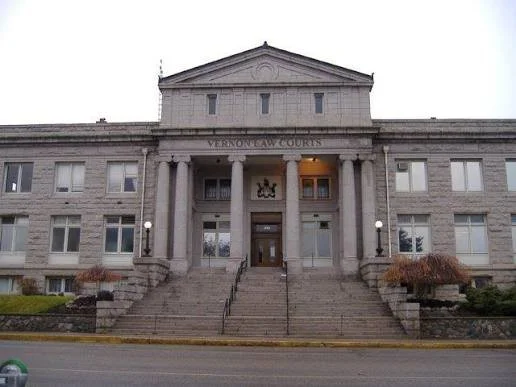
Vernon Law Courts, where the B.C. Supreme Court case involving The Owners Strata Plan KAS 3310 was heard. The strata was ordered to pay two owners $44,800 after the court found they had been significantly unfairly treated.
File photo
A Vernon strata has been ordered to pay two owners $44,800 after a B.C. Supreme Court judge found they were unfairly singled out during a years-long dispute over rooftop planters and irrigation.
Justice B. Hardwick found the strata at The Strand, a development on Okanagan Lake, acted reasonably when it initially shut off irrigation and undertook major roof repairs after years of leaks.
But the judge found some of what followed crossed the line into significant unfairness, including removing Richard and Leslie Chisholm’s plants and planters without notice and later treating their rooftop patio differently from those belonging to other owners.
The judgment in Chisholm v. The Owners Strata Plan KAS 3310 is dated July 22 and was posted by the B.C. Supreme Court on Aug. 26.
The Chisholms, who primarily live in Calgary, bought their top-floor unit at The Strand in 2008. According to the judgment, the rooftop patio was an important part of their decision to buy the property.
Leslie Chisholm used the large irrigated planters extensively. Hardwick said photographs entered as evidence showed rosebushes and an apple tree that had grown close to mature size.
Problems elsewhere in the development began appearing within a few years.
Multiple owners had reported signs of roof leaks by 2010, and a 2013 building-science report identified improperly sealed irrigation pipes as a potential source of roof and waterproofing problems.
The strata shut off irrigation to rooftop planters sometime between the summer of 2013 and spring 2014. The Chisholms were not notified before the water was turned off, and their existing plants died.
Hardwick nevertheless found the decision to suspend irrigation was reasonable.
He found the strata was dealing with established roof leaks and knew some rooftop water pipes had been improperly installed. Later investigations also identified serious problems involving rooftop planters and the roof membrane.
The judgment also records conduct by the Chisholms that Hardwick criticized.
In 2015, they installed their own watering system without the strata’s knowledge or approval. Hardwick described that kind of “self-help conduct” as unhelpful in a strata setting.
A subsequent investigation concluded rooftop planters were contributing to the leaks, and the strata ultimately decided to remove all of them while the roof was repaired.
The Chisholms’ planters were removed on Feb. 26, 2016, without notice.
That was one of the points where Hardwick found the strata had acted unreasonably.
There was no evidence explaining why the Chisholms could not have been given enough warning to save some of their plants or arrange a less destructive outcome, the judge found.
Hardwick awarded them $16,800 for replacement planters, plants, soil, fertilizer and irrigation equipment.
The dispute continued as the roof and rooftop patios were rebuilt.
By the end of summer 2019, replacement planters had been installed on every rooftop unit except the Chisholms’.
The judgment records differing positions on how that happened. The Chisholms said the replacement planters offered to them were much smaller or otherwise unsuitable compared with those provided to other owners. A strata council member said the couple declined to consent to the planters the strata proposed.
The Chisholms eventually purchased their own planters.
Hardwick found, however, that the strata subsequently treated them differently in several significant ways.
Other rooftop owners were initially offered one type of replacement planter, while the Chisholms were offered smaller aluminum planters or recycled or repurposed ones. The strata also rented a crane to move planters and soil to other rooftop units but did not offer the Chisholms the opportunity to use it.
The Chisholms were initially the only rooftop owners required to sign an indemnity agreement related to the planters, although the strata later asked all rooftop owners to sign one.
Most significantly, Hardwick found, irrigation was restored to other rooftop patios in 2019 but was not turned back on for the Chisholms until the summer of 2023.
“The Strata unfairly singled out the Chisholms,” Hardwick wrote.
The judge found that personal conflict had also become part of the prolonged dispute.
He said acrimony and personal grudges had entered the Chisholms’ dealings with different versions of the strata council. He also found the Chisholms themselves could be sensitive and sometimes prone to hyperbole in describing the effects of their interactions with the strata.
Neither finding, he said, displaced the strata’s obligation to act reasonably and without significant unfairness.
Under B.C.’s Strata Property Act, strata corporations are generally responsible for managing and maintaining common property and common assets for the benefit of owners. Section 164 allows the B.C. Supreme Court to make orders to prevent or remedy significantly unfair actions or decisions by a strata corporation or council.
Hardwick awarded the Chisholms another $28,000 for loss of use of their rooftop planters.
Although their irrigation had been off for about a decade, the judge did not calculate damages for that entire period. He found they could still use the patio for activities such as reading and entertaining and accepted that strata owners do not have the same control over the timing and nature of repairs as owners of fee-simple property.
Instead, he focused on the four years when the other rooftop owners had irrigation and the Chisholms did not, assessing damages at $7,000 a year.
The total award was $44,800, plus interest.
The Chisholms did not succeed on all of their claims.
They alleged two incidents of unauthorized entry into their unit and argued people acting for the strata were responsible. Hardwick found there was insufficient evidence to establish on a balance of probabilities that a strata representative or authorized agent had entered the unit without permission.
He also rejected their request for punitive damages, finding that while the strata’s conduct was improper at times, it did not reach the level required for such an award.
Hardwick similarly declined to award the Chisholms the cost of a survey they obtained for their new planters, finding it was reasonable for the strata to ensure the different planters they selected would not cause structural problems.



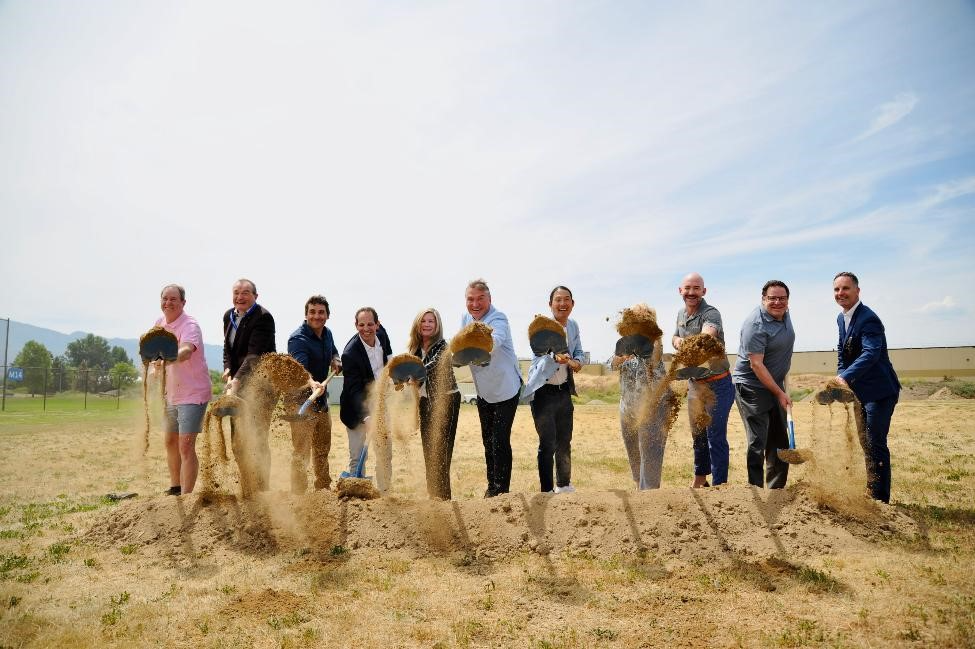


Nine new outdoor pickleball courts opened at Glenmore Recreation Park on Oct. 8, expanding public recreation facilities in north Kelowna as construction continues on other parts of the park.