Third bear from Nelson grizzly family killed after relocation to Christina Lake
Male yearling was killed after repeatedly returning to residential areas; his female sibling remains under provincial monitoring
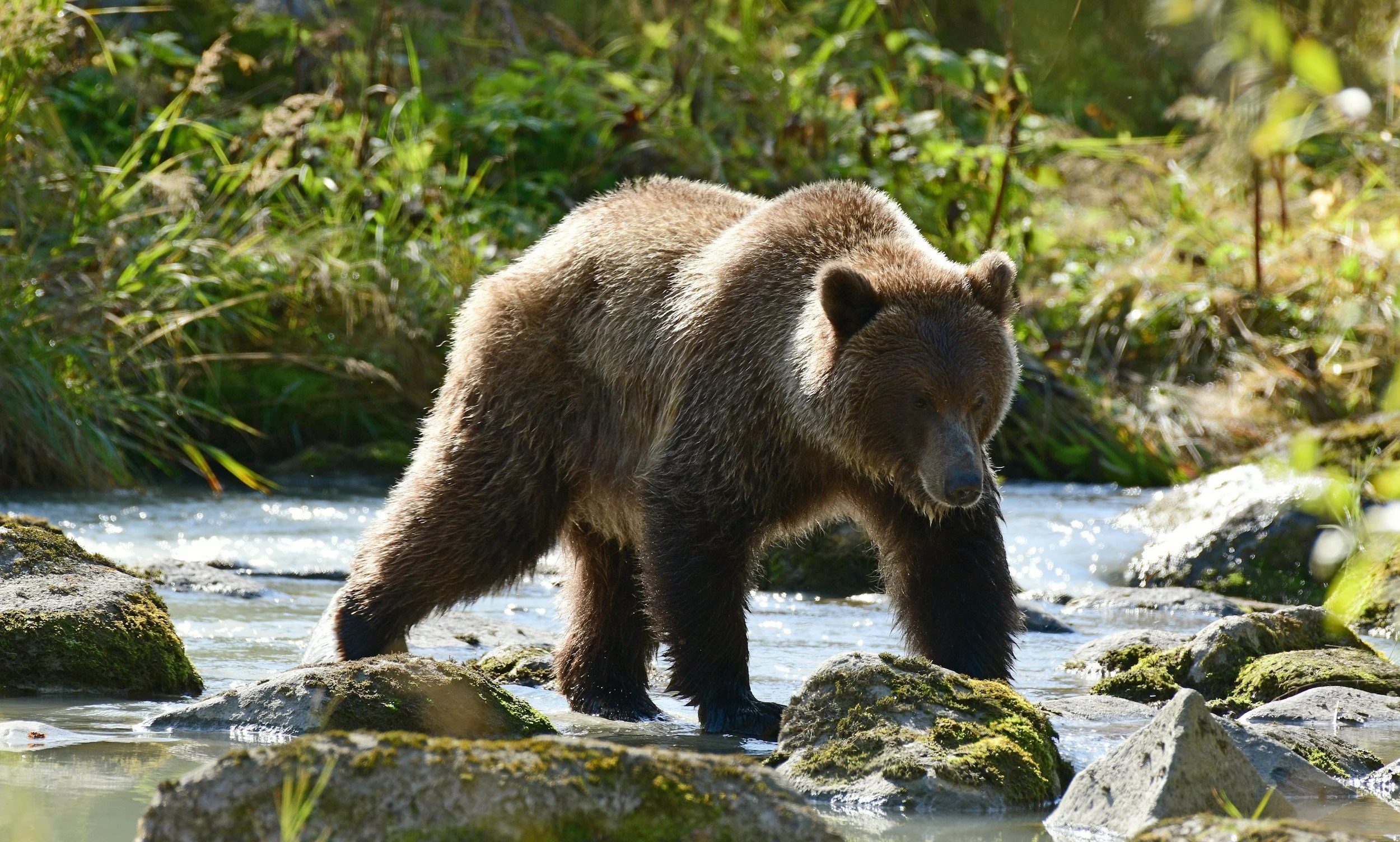
A grizzly bear crosses a river.
File photo.
The controversy surrounding Nelson’s grizzly family, already the subject of widespread public discussion across British Columbia, took another turn on Aug. 27 when the B.C. Conservation Officer Service killed one of the two yearlings relocated earlier in the month.
Three of the four bears associated with the family group have now been killed. By Aug. 14, the sow and an injured bear associated with the family had been killed, while two yearlings had been captured and relocated. According to the COS update issued Aug. 27, the remaining female yearling was still alive and being monitored.
The two collared yearlings were relocated Aug. 14 to a mountainous area more than 50 kilometres from Nelson where seasonally productive vegetation was available, COS said. Within days, both had reached Christina Lake, more than 30 kilometres from the release area.
The male subsequently left Christina Lake and returned. Reports to the province’s RAPP line placed him on the beach, in a boat, in backyards and on the golf course. COS said he was also observed eating garbage at a busy campground resort on Aug. 27.
The service said the bear’s comfort around people, reliance on non-natural food and previous relocation meant another relocation or rehabilitation was no longer considered viable. He was killed under provincial human-wildlife conflict response guidelines.
The female yearling had moved away from Christina Lake by the time COS released its Aug. 27 update. The service said she continued to be closely monitored but did not disclose her location in that update.
Christina Lake director responds
In a community update about the two young grizzlies being seen around Christina Lake, Area C/Christina Lake director Grace McGregor said she had received numerous calls and emails from residents.
McGregor said she was concerned about the possibility of a person or pet being hurt, while also wanting the bears to return to remote habitat. She acknowledged calls for a town hall but said decisions about wildlife response belong to provincial professionals rather than the Regional District of Kootenay Boundary or its elected officials.
She urged residents to rely on direct, qualified sources and to secure garbage, fruit, compost, pet food, birdseed, outdoor freezers and other possible attractants. Residents should also supervise pets, give bears space and report concerning behaviour, she said.
Following the announcement that the male yearling had been killed, McGregor again called on residents and campground operators to secure food, garbage, organics and outdoor refrigerators and freezers. She described unsecured attractants as “a people problem,” writing that when people fail to comply, “the bears pay.”
Province defends earlier decisions
Before the male yearling was killed, the province provided the Boundary Sentinel with a statement addressing its management of the Nelson family.
David Karn of the Ministry of Environment and Parks sent the statement on behalf of the B.C. Conservation Officer Service and the Ministry of Water, Land and Resource Stewardship.
The province acknowledged that the case had generated frustration and discussion across B.C. and beyond. It said decisions were made jointly by conservation officers, wildlife biologists and the provincial wildlife veterinarian, with public safety as the primary consideration.
According to the statement, the sow and her offspring had been monitored for several years. The sow repeatedly returned to Nelson for non-natural food and spent extended periods in residential neighbourhoods, despite having been relocated with previous offspring in 2023.
The province said experience and established practices indicated that another relocation, hazing or aversive conditioning would have had little chance of changing her behaviour. It said the decision to kill her was based on years of monitoring and an assessment of her complete history rather than one incident or season.
The injured bear was described in the statement as both injured and food-conditioned. The province said additional animal-health considerations contributed to the decision to euthanize that bear but did not provide the veterinary findings behind that assessment.
Detailed questions remain unanswered
The Boundary Sentinel had asked what changed between an earlier COS assessment of the injured bear and the subsequent decision to kill it. It also asked for the incidents making up the bear’s stated conflict history, whether any involved aggression, whether the leg injury had deteriorated, whether a necropsy was performed and whether rehabilitation facilities were contacted or considered.
The provincial statement did not answer those questions.
It also did not provide the number of documented incidents involving the sow this year, details of work undertaken at properties she visited or the number of warnings, tickets, compliance orders or other enforcement measures related to wildlife attractants.
For the surviving yearlings, the Boundary Sentinel requested their approximate ages, weights and body condition, the biological assessment supporting their release without their mother, details of their monitoring and the intended duration of that monitoring. Those details were not included in the response.
The province did say the original decision to relocate the two surviving yearlings was made with the hope that they would remain in the wild and return to natural feeding behaviour. Thirteen days after that relocation, the male was killed following his return to a populated area and reported access to garbage.
The Boundary Sentinel also asked whether recommendations from the province’s review of human-bear conflict management had been applied in this case. The review was announced with the Grizzly Bear Foundation in September 2024, and its independent committee was expected to make recommendations in spring 2025 concerning COS training, policies, procedures and information sharing.
The Aug. 25 response did not say whether those recommendations had been completed, made public or applied to the Nelson case.
As of the COS update issued Aug. 27, the female yearling had moved away from Christina Lake and remained under close provincial monitoring.





Nine new outdoor pickleball courts opened at Glenmore Recreation Park on Oct. 8, expanding public recreation facilities in north Kelowna as construction continues on other parts of the park.