Rotary-led Okanagan campaign raises more than $580,000 for invasive mussel research
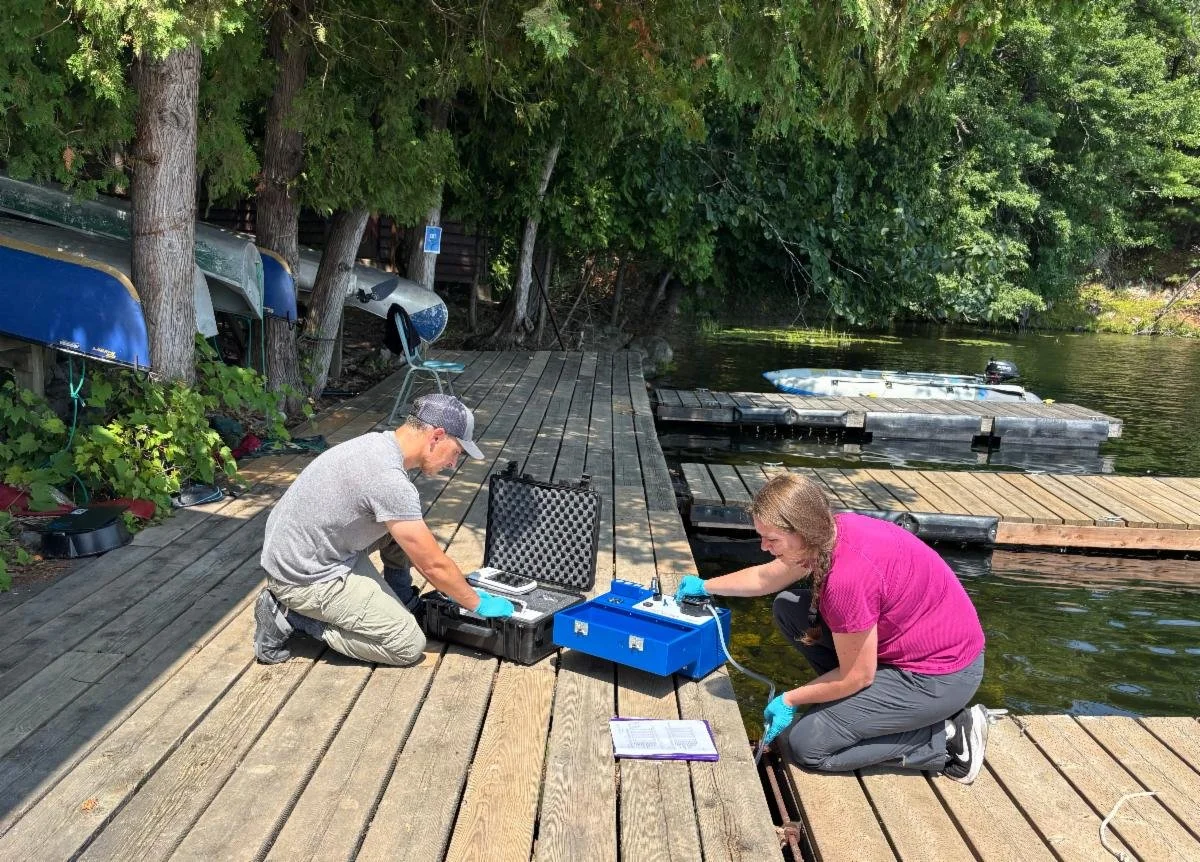
Dr. Michael Russello, Principal Investigator (left), and Dr. Danielle Schmidt, Mitacs Accelerate Postdoctoral Fellow (right), testing protocols for water sampling and real-time, eDNA detection of invasive mussels on the shore of Lake Opinicon at Queen’s University Biological Station on July 22, 2026. Photo from Okanagan Basin Water Board
Researchers are developing a portable detection system that could help inspectors identify contaminated watercraft before invasive mussels reach B.C. lakes
SYILX TERRITORY, KELOWNA, BC — A Rotary-led fundraising campaign has raised more than $580,000 for research aimed at detecting invasive mussels before they enter British Columbia waterways.
The campaign exceeded its original goal of $475,000 for the two-year project, led by researchers at UBC Okanagan in partnership with the Okanagan Basin Water Board and institutions in Ontario and California.
Researchers are developing a portable environmental DNA system that could eventually be used at roadside watercraft inspection stations. The technology would collect and process genetic material from water found on boats and other equipment, helping inspectors identify watercraft that may require decontamination or quarantine.
Environmental DNA, commonly called eDNA, allows researchers to detect genetic traces left by organisms in water without having to find the organisms themselves.
The Okanagan Basin Water Board contributed $200,000 to launch the project. The Colin and Lois Pritchard Foundation provided $100,000, Mitacs contributed $75,000 and the City of Kelowna–UBC Okanagan Research Alliance added another $100,000.
A public campaign led by Okanagan Rotary clubs raised an additional $109,000 from clubs and individual donors. Participating organizations included the Rotary Club of Kelowna Okanagan Mission, the Rotary Club of Kelowna and the Rotary Club of the Rivers.
James Littley, chief operating officer of the Okanagan Basin Water Board, said the project shows the value of responding to the invasive mussel threat before the species becomes established in local lakes.
The additional money could allow the project to move beyond its initial research phase and bring the technology closer to use by watercraft inspectors, according to the water board.
Researchers from UBC Okanagan are working with Queen’s University in Ontario and the University of California, Davis. Testing conducted in Ontario in July included water-sampling protocols and real-time eDNA detection.
The research comes as invasive mussels continue to spread across North America. Zebra mussel larvae were recently detected in Lake of the Prairies, which straddles Manitoba and Saskatchewan, while golden mussels first detected in California in 2024 have spread within that state.
Golden mussels can survive in a wider range of water conditions than zebra and quagga mussels, increasing the number of waterways and infrastructure systems that could be vulnerable.
Previous provincial estimates cited by the water board found that zebra and quagga mussels could cost British Columbia between $64 million and $129 million each year. Potential impacts include damage to drinking-water systems, irrigation equipment, hydroelectric facilities, marinas and aquatic ecosystems.
Invasive mussels can attach to boats and other watercraft and survive in small amounts of standing water. The water board is reminding anyone transporting a boat into the Okanagan to clean, drain and dry all watercraft and equipment, remove drain plugs during transportation and stop at every open inspection station.



Grizzly Discoveries Inc. is seeking to raise up to $2 million as the company continues fall exploration across its Greenwood-area properties and prepares for drilling planned between October and December.