Rossland projects roughly $60M in five-year capital needs as staff flag possible 2027 borrowing
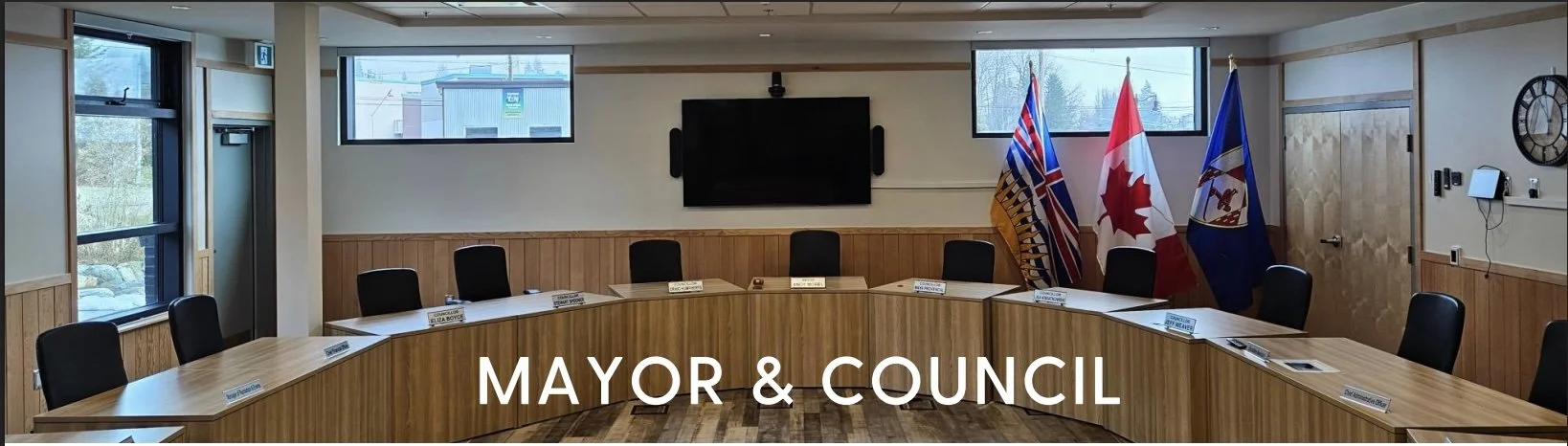
Rossland Mayor Andy Morel and councillors Eliza Boyce, Lisa Kwiatkowski, Craig Humpherys, Maya Provencal, Stewart Spooner and Jeff Weaver are pictured in the City of Rossland’s 2024 annual report.
Photo credit: City of Rossland
ROSSLAND — Rossland is planning for roughly $60 million in capital spending over the next five years, with municipal staff warning that additional borrowing will likely be needed as early as 2027 to help pay for water, sewer, retaining-wall and other infrastructure work.
The outlook is contained in the City’s third-quarter Corporate Management Plan going to council Monday, Oct. 5. Council is receiving that report and a separate Q3 budget update for information. It is not being asked Monday to authorize new borrowing or approve the full five-year capital program.
Earlier City budget work placed the five-year capital requirement at about $60.4 million. Approximately $39.1 million was associated with water and sewer infrastructure identified through the Utilities Master Plan, while another $10.2 million was allocated to retaining walls. Roads, municipal facilities, equipment and other capital projects make up the rest.
The Q3 management report says the City is continuing to develop a long-term financing strategy for that work and that additional debt financing is “highly likely” to be required for projects beginning as early as 2027. A proposal for additional debt is already incorporated into the 2026-30 financial plan, with further changes expected to be considered during preparation of the 2027-31 plan.
During budget discussions earlier this year, the City said it had about $6.8 million in existing debt and was considering as much as $10 million in additional borrowing over five years, depending on project timing and grant funding. The Oct. 5 reports do not authorize that amount as new debt.
One of the largest individual projects in the current capital plan is the $6.718-million Warfield Trunk Sewer project. The 3.76-kilometre trunk carries Rossland’s wastewater toward the regional treatment system in Trail and has been identified by the City as a major infrastructure priority.
The Q3 budget report shows no expenditure booked against the $6.718-million project through Sept. 30. The City says overall capital spending remains in line with expectations and that much of its construction and acquisition spending occurs later in the year, so the zero balance does not establish that the sewer project has been delayed.
Grant funding remains a significant factor. The Q3 report says Rossland had not received the grant revenue budgeted for the trunk sewer project by the end of September. The available City material does not make clear whether an application remains under review, funding has been approved but not yet received, or no grant has been awarded.
Rossland has previously estimated that about 70 per cent of its planned five-year capital program depends on senior-government grants. Projects that do not receive expected funding can be delayed, phased, redesigned or reprioritized.
The City is also facing higher regional sewer costs connected with the Regional District of Kootenay Boundary’s Columbia Pollution Control Centre upgrade.
For 2026, the regional component of a typical Rossland residential sewer bill rose 65 per cent, from $20.63 to $34.04 per month. A further 10-per-cent increase is scheduled for 2027. The treatment-plant project is expected to cost roughly $76 million, with federal and provincial contributions covering about $46 million and the remaining local share financed through the regional district.
Rossland is drawing on its Regional Sewer Utility Reserve to reduce the immediate effect on ratepayers, including $164,000 budgeted for 2026 and $180,000 for 2027.
Local utility rates are also increasing. General water rates rose 10 per cent in 2026 and are scheduled to rise another 10 per cent in 2027, while Rossland’s municipal sewer component is following the same schedule.
Staff are working on a broader utilities business model covering water, sewer and stormwater and examining the future mix of parcel taxes, user fees, property taxes and other revenue. The Q3 management report lists that work as 90 per cent complete.
No new utility funding formula or stormwater charge is before council Monday.
Stormwater work is also affecting the timing of some future infrastructure planning. Rossland has received grant funding for a stormwater modelling and management plan, with the project now underway. Staff expect that work to be completed in the first quarter of 2027 before pre-planning proceeds on the five highest-priority Utilities Master Plan projects.
Earlier capital planning also identified sanitary sewer infrastructure around Saint Paul Street. The current Q3 report separately confirms that the Star Gulch Dam review is underway and that retaining-wall work is continuing.
Rossland has allocated roughly $10.2 million to retaining walls over five years. Construction on the first phase of the McLeod Avenue wall began in July and was about 90 per cent complete by the time of the Q3 report, with completion expected later in October.
The City had spent approximately $1.46 million of its $10.6-million 2026 capital budget through Sept. 30, or about 14 per cent. The Warfield trunk sewer accounts for most of the gap between the annual capital budget and spending recorded so far.
Council will have one related financial-policy decision before it Monday. Staff are recommending approval of an amended Reserve & Surplus Policy that updates reserve information and financial thresholds.
The policy governs reserves used for purposes including water and sewer capital work, grant matching, debt management and regional sewer costs. Staff say moving all reserves toward their targeted minimum balances may take several years.
The reserve amendment does not authorize new debt. Any future borrowing would require a separate process as Rossland moves into its next financial plan and determines which projects proceed, how much grant funding is available and how remaining costs are divided among reserves, utility revenues, taxes and debt.





Property owners who carry out unauthorized development near streams, lakes and wetlands in Electoral Area G could face a new layer of enforcement under proposed Regional District of Central Kootenay changes intended to put more of the cost of dealing with violations on the responsible property owner.