Play, Clean, Go
By Briana Burch
Outreach Specialist, Boundary Invasive Species Society
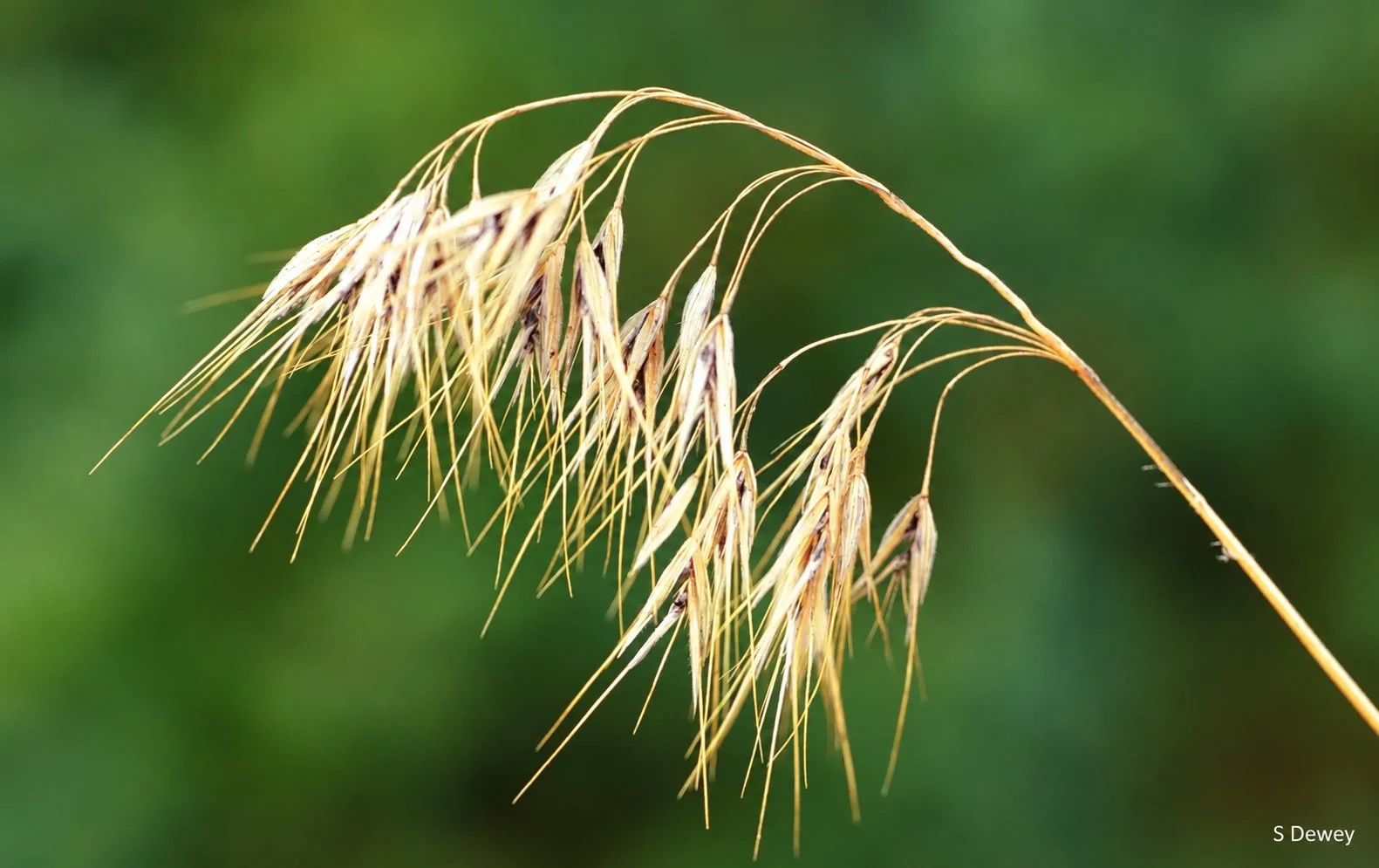
Grass seed heads illustrate how seeds can attach to clothing, animals and outdoor equipment, contributing to the spread of invasive species.
Photo: S Dewey / supplied by the Boundary Invasive Species Society.
You might not realize it, but your boots, bike, or camping gear could be carrying more than you packed for your next adventure. Each time we step outside to explore a new area, there is a risk of spreading unwanted hitchhikers with our gear. Invasive plants and animals can spread quickly by attaching themselves to camping and hiking gear, bikes, boats and watersports gear, or motorized vehicles such as cars and ATVs. They can also hitch a ride on our shoes, clothing, and even our pets.
Invasive species are non-native or introduced species that do not naturally occur in an area and, when introduced, can have negative impacts on native species currently existing in the ecosystem. Invasive species can outcompete native species for space and resources in both terrestrial and aquatic ecosystems.
There are many ways invasive species can hitch a ride during our outdoor adventures, often without us even noticing. When hitting the trails, seeds and plant fragments can become lodged in the tread of our shoes, caught in our pets’ fur, or trapped in the mud on bikes and off-road vehicles. Horses and livestock can also contribute to the spread of invasive plants. Seeds and plant material can become trapped in hooves or fur, while contaminated hay and feed can introduce invasive plants to new areas. Using certified weed-free hay and checking animals before moving between areas can help reduce this risk. Even a camping trip can provide invasive species with a way to travel. Firewood can carry invasive insects and diseases, which is why it is important to buy firewood locally and burn it where you buy it. Tents, camping equipment, and other gear should also be inspected and cleaned before moving between sites. The same goes for adventures on the water. Boats, paddles, fishing gear, trailers, and other equipment can transport aquatic invasive species between waterbodies, making proper cleaning, draining, and drying essential before heading somewhere new.
Cheatgrass (Bromus tectorum), also known as speargrass or downy brome, is a prime example of an invasive plant that people have accidently helped spread. It attaches to animal fur or human clothing, and clings to vehicles, equipment and gear. (This species produces the sharp seeds that stick into your socks after a short walk through the grass in the summer.) This grass is widespread throughout the Boundary. Over time, cheatgrass can outcompete native grasses and forbs as well as agronomic grasses, reducing forage livestock and wildlife. It’s sharp awns can damage the eyes, mouth, and face of both wildlife and livestock. Finally, this species can increase the risk of wildfire by creating monocultures, which die off early in the year leaving a dense load of very fine fuels behind.
Knowing how to prevent the spread of invasive species is key to protecting the outdoor spaces we know and love. You can do your part to protect local ecosystems by following the PlayCleanGo initiative: REMOVE any seeds, soil, plants, or other unwanted hitchhikers you find on yourself, your pets, equipment, or vehicles; CLEAN your outdoor gear between adventures so invasive species aren’t carried to your next destination; STAY on established trails and roads to avoid disturbing vegetation and picking up invasive species; and use certified weed-free hay and locally sourced firewood whenever possible. These simple actions can help prevent invasive species from hitching a ride and establishing somewhere new.



Christina Lake voters have elected Rupert Oldroyd as their new regional district director, while preliminary results in Midway show incumbent Mayor Doug McMynn leading a three-candidate race following the October 17 local elections.