Kokanee Creek count far below past two years as drought pressures fish elsewhere in southern Interior
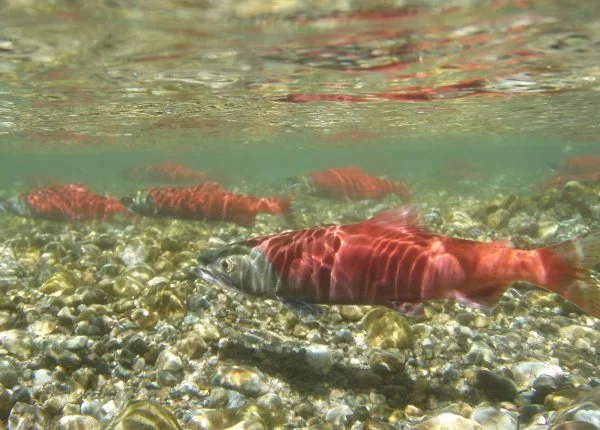
Spawning kokanee gather at the Meadow Creek Spawning Channel on Kootenay Lake. The Kokanee Creek Nature Centre reported just 107 fish in its spawning channel on Aug. 30, far below the same-date counts in 2024 and 2025.
Photo: Government of B.C.
Only 107 kokanee were counted in the spawning channel at Kokanee Creek on Aug. 30, far below the numbers recorded on the same date in each of the past two years.
The Kokanee Creek Nature Centre reported 2,142 kokanee in the channel on Aug. 30, 2025, and 2,040 on Aug. 30, 2024. This year's count is about 95 per cent lower than either of those figures.
BC Parks says the annual kokanee run at Kokanee Creek generally occurs from mid-August to mid-September. The Aug. 30 count therefore falls within the usual spawning period, although it is not yet clear how the timing of this year’s run compares with previous years.
The Nature Centre did not identify a cause for the low number, and provincial sources reviewed by The Boundary Sentinel do not attribute the Kokanee Creek count to drought. It is not yet clear whether fewer fish are returning this year, whether the run is developing later than in the previous two years, or whether other factors are affecting the count.
The low number comes, however, as drought and low streamflows are creating documented problems for spawning salmon elsewhere in B.C.'s southern Interior and as officials report low levels and inflows in Kootenay Lake.
Two days before the Kokanee Creek count was posted, the B.C. government issued a fish population protection order for Bessette Creek in the Thompson-Okanagan region to protect endangered Chinook salmon.
The Ministry of Water, Land and Resource Stewardship said severe drought had caused persistent low streamflows in the watershed. Flows reached record lows in early July and remained below the minimum level required to support fish survival.
The order, which took effect Aug. 28, requires 131 surface-water and groundwater licence holders and transitioning groundwater users in the Bessette Creek watershed to stop using water for several specified purposes, including some agricultural, mining and industrial uses.
The province said significant voluntary conservation efforts had already taken place, but flows remained too low to adequately protect the salmon.
Bessette Creek and Kokanee Creek are in separate watersheds and involve different salmon populations, so conditions in Bessette Creek cannot be used to explain the Kokanee Creek count. The provincial action does provide a current example of the risks low streamflows can pose to migrating and spawning salmon during drought.
According to the province, drought can reduce streamflows, increase water temperatures and leave fish habitat partially or completely dewatered. Low flows and high temperatures can also delay migrating fish from entering spawning streams. Kokanee are among the fish species the province identifies as vulnerable to drought conditions.
Low-water conditions have also been documented in the Kootenay Lake basin this summer.
The International Kootenay Lake Board of Control reported July 29 that the lake was experiencing low water levels and inflows following above-average temperatures and below-average precipitation in the basin.
Inflows to Kootenay Lake declined from a spring peak of 2,438 cubic metres per second on May 28 to 575 cubic metres per second by July 28, according to the board.
Provincial streamflow monitoring has also recorded low flows elsewhere in the West Kootenay. The B.C. River Forecast Centre's Aug. 27 Kootenay-Boundary low-streamflow report showed Redfish Creek near Harrop at Drought Level 3. Its seven-day average flow was at the sixth percentile of the historical record for the same period.
Those figures do not establish what is happening in Kokanee Creek itself. Determining whether drought has played any role in this year's spawning return would require information on conditions in Kokanee Creek, including streamflow and water temperature, along with information about the timing of the migration and results from other Kootenay Lake spawning areas.
The low Kokanee Creek count also comes after broader Kootenay Lake kokanee numbers showed signs of recovery.
Provincial monitoring in 2024 estimated 517,390 kokanee spawners in Kootenay Lake, up from approximately 154,000 in 2023. The Fish & Wildlife Compensation Program reported that the 2024 figure was the highest documented since the population collapsed in 2013.
The Kokanee Creek spawning channel represents only one part of the lake's kokanee population. Provincial monitoring includes several tributaries and spawning areas, as well as other methods used to assess the lake-wide population.
That work includes the Meadow Creek Spawning Channel at the north end of Kootenay Lake, where provincial monitoring, operations and habitat work continue.
Counts later in the spawning season will provide a more complete picture of the 2026 Kokanee Creek return. Information from provincial fisheries biologists on conditions in the creek and results from other spawning areas will also be needed to determine whether the unusually low Aug. 30 count reflects a broader change in the Kootenay Lake kokanee population or conditions specific to Kokanee Creek.





Nine new outdoor pickleball courts opened at Glenmore Recreation Park on Oct. 8, expanding public recreation facilities in north Kelowna as construction continues on other parts of the park.