Grand Forks-developed forest reform proposal reaches B.C. ministers
Boundary group pitches proposed New Forest Act to ministers responsible for forests and land management
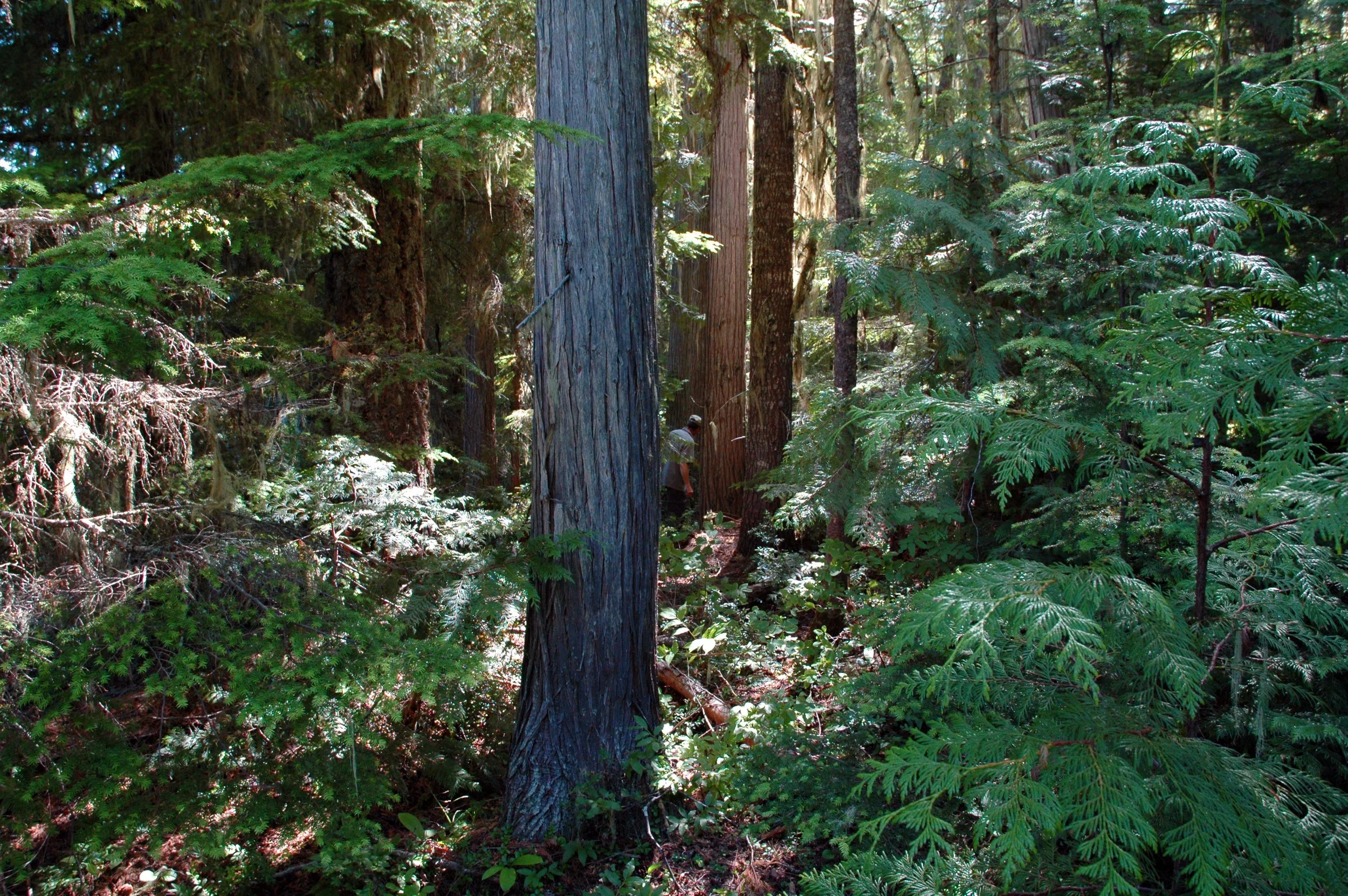
Old-growth cedar-hemlock forest in the Kettle River watershed. The Boundary Forest Watershed Stewardship Society’s proposed New Forest Act would make ecological integrity an overriding objective in forest management.
Photo courtesy Boundary Forest Watershed Stewardship Society
GRAND FORKS — A proposal for sweeping changes to British Columbia’s forestry laws that grew out of concerns in Grand Forks and the Boundary has been presented to the two provincial ministers responsible for forests and land management, according to the Boundary Forest Watershed Stewardship Society.
BFWSS said its representatives met Sept. 9 with Forests Minister Ravi Parmar and Water, Land and Resource Stewardship Minister Randene Neill to present a proposed New Forest Act. The society said senior government staff also attended.
The proposal would substantially rewrite the legal and administrative framework governing forestry in B.C., making ecological integrity an overriding management objective while giving communities and Indigenous people formal roles in local and regional decision-making.
It remains a proposal developed outside government rather than provincial legislation. As of Sept. 22, The Boundary Sentinel found no public response from either ministry indicating whether the government intends to pursue any part of it.
The campaign has its roots in the Boundary. BFWSS says it formed in February 2019 through the leadership of a person affected by the 2018 Grand Forks flood, bringing together residents concerned about forestry, watersheds and the ability of communities to influence decisions about surrounding Crown land.
The society has argued that forestry practices contributed to the severity of flooding and other watershed problems in the region. That position is part of the organization’s advocacy and is not an established finding about the causes of the 2018 flood.
“This started in the Boundary because we could see that the problems we were dealing with locally could not be solved locally,” New Forest Act campaign director Jennifer Houghton said in a Sept. 22 statement. “Communities can fight individual cutblocks or ask for changes to individual plans, but the rules governing forestry are set provincially. It became clear that nothing changes until the legislation changes.”
The call for legislative reform predates the current campaign. In 2021, BFWSS published A Brighter Future for Boundary Forests, which called for a new Forest Act, ecological integrity as an overriding management principle, greater local administration of forests, tenure reform and an independent Forester General.
Those ideas were developed further in the current New Forest Act proposal, which credits Houghton, forest ecologist Herb Hammond, retired forestry professional Dave Weaver and former B.C. Forest Service employee Ray Hanson with research, writing or contributions. BFWSS took the proposal on a provincial roadshow in June, with presentations in communities across the Interior, Vancouver Island and Victoria.
The current framework is organized around what the campaign calls a Protect-Restore-Harvest model. Under the proposal, remaining primary forests would be protected from industrial logging and new roads, while previously logged or degraded landscapes could be designated for restoration. Commercial harvesting would be concentrated in previously disturbed areas where ecological conditions allow it.
The proposal calls for greater use of selection and partial-cutting systems intended to maintain continuous forest cover, while making watersheds a central unit of forest planning. Decisions about timber harvesting would take water supply, flood and drought risks, slope stability, biodiversity, wildfire and other ecosystem functions into account before determining how much timber could be removed.
The framework also calls for the eventual replacement or repeal of several pieces of existing forestry legislation, including the Forest Act and Forest and Range Practices Act, while retaining and more fully implementing the Water Sustainability Act.
It proposes changes to B.C.’s forest-tenure system as well. BFWSS says existing licences could be wound down as they reach replacement points, producing what it describes as a one-to-five-year transition away from the current system. The current Forest Act does not, however, establish a uniform five-year renewal date for all forest licences, and replacement provisions vary by tenure type. Any transition based on those provisions would therefore require legislative and legal work beyond the mechanism described in the proposal.
The proposal would create an independent Forester General accountable to the Legislature and would establish Community Forest Boards to oversee local forests and watersheds. Those boards would include local residents and local Indigenous people, while regional committees would include representatives of Indigenous Nations.
Indigenous Knowledge Panels and regional science panels would provide advice to the local boards. The framework also proposes a Ministry of Ecosystem Integrity with Indigenous and non-Indigenous participation in its leadership structure. BFWSS says the proposal is intended to operate alongside, rather than determine, broader legal and political questions involving Indigenous rights and title.
Economic restructuring is also part of the framework, which proposes regional log-sort yards and auctions for publicly owned timber. BFWSS argues those measures could give small and medium-sized manufacturers greater access to logs and support more local processing.
The proposal also anticipates employment in restoration, monitoring, planning, science and Indigenous Guardian programs. Those are projected outcomes advanced by the campaign and have not been adopted as provincial forecasts.
The proposal reached Parmar and Neill as the provincial government pursues its own changes to forest management. In August, B.C. announced that it would explore a Working Forest Landscape Model dividing selected areas into three broad categories: a Working-Forest Zone where commercial timber production would be the primary objective, a Multiple-Use Zone and a Conservation and Protection Zone.
On Sept. 15, the Province identified the Campbell River area as the first candidate location for that model, working with Na̲nwak̲olas Council and four member First Nations.
The Province is also replacing Forest Stewardship Plans over time with Forest Landscape Plans, which are intended to address timber supply, environmental protection, Indigenous values, local community values and risks including wildfire and drought at a broader landscape scale.
Current provincial policy calls for Forest Landscape Plans to be developed in partnership with First Nations, in collaboration with licence holders and with community and public engagement. B.C.’s Declaration on the Rights of Indigenous Peoples Act also allows the Province to enter agreements with Indigenous governing bodies for joint statutory decision-making or decisions requiring consent.
There is overlap between those reforms and some of the issues raised by BFWSS, including landscape-scale planning, ecological values, First Nations participation and community interests, although the New Forest Act proposal would go further by replacing core forestry statutes, changing the tenure system and restructuring who participates in forest-management decisions.
BFWSS criticized the Province’s Working Forest Landscape Model after it was announced, arguing that retaining a zone where timber production is the priority leaves what the organization considers the central problem intact.
According to its Sept. 22 release, the society made the same argument directly to Parmar and Neill during the Sept. 9 meeting, telling them that changing zoning and planning within the existing system would not address what it sees as flaws in the legislation itself.






Chilliwack RCMP is asking for the public’s help locating a 67-year-old woman reported missing Tuesday.