Meet the candidates: Roly Russell, BC NDP
Russell answers 11 Boundary Sentinel questions on forestry, rural health care, affordability and representing Boundary-Similkameen.
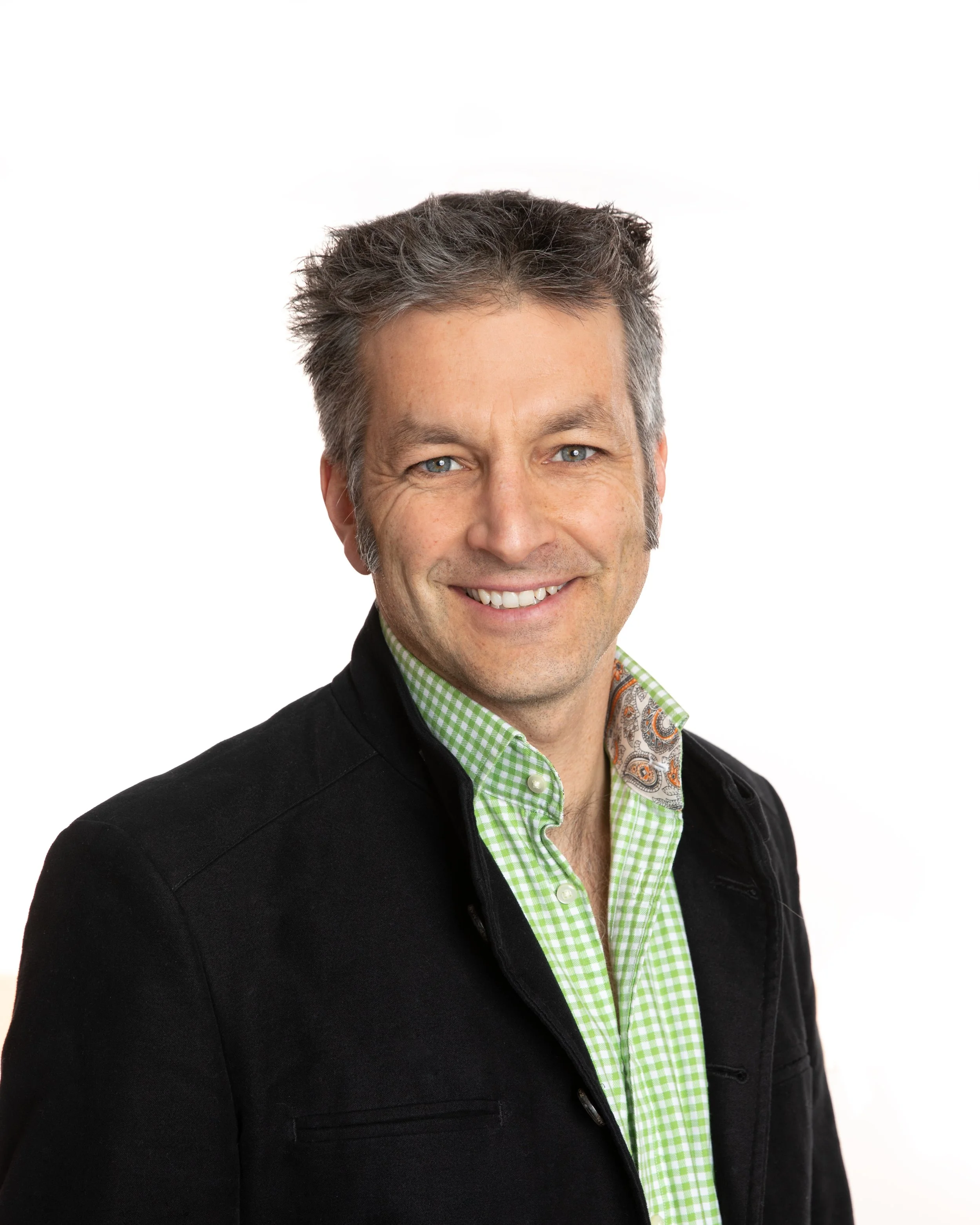
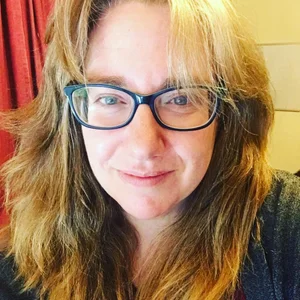
Roly Russell is the BC NDP candidate for Boundary-Similkameen in the October 24, 2026 provincial election.
Photo credit: BC NDP
Boundary-Similkameen | 2026 provincial election
The Boundary Sentinel invited all three candidates running in Boundary-Similkameen in the October 24, 2026 provincial election to answer questions about their backgrounds, priorities and plans for the riding.
Each candidate was offered the same 10 core questions, covering forestry, rural health care, agriculture, affordability, constituency representation and political accountability, along with one additional question specific to their candidacy.
Candidate profiles will be published as responses are received. The answers below are presented in full, without cuts, and reflect the candidate's own views, statements and proposals.
Roly Russell is the BC NDP candidate for Boundary-Similkameen. He previously represented the riding in the B.C. Legislature from 2020 to 2024 and served as parliamentary secretary for rural development. He lost the seat to Conservative candidate Donegal Wilson in the 2024 provincial election.
Russell submitted the following responses to the Boundary Sentinel on October 9, 2026.
Question one:
You have now had the experience of serving as an MLA. What did the job teach you that campaigning for it could not, what would you do differently if elected again, and what do you wish voters understood about you now that they may not have known at the last election?
Talk is cheap, action demands a lot. I learned from watching others ‘across the aisle’ how differently different people work in that place: most adopt the partisan approach and choose adversarial approaches which they believe score political points for some imaginary game through negativity and fear (but fail to create or build anything better), and then others chose a path of non-partisan collaboration to actually accomplish things for their ridings and for BC (for example, Dan Ashton from Penticton, CoraLee Oakes from the Cariboo). We need more people who are there to make BC better, not there just to tear down people who are ‘other’.
The work of an MLA can be brutally difficult, if you actually try to do it well. The other remaining 20% of the work is enormously rewarding and makes it all worthwhile (for example, I was proud to be part of the team that repealed and fully rebuilt our laws and approaches of dealing with disaster management in BC).
Question two:
What do you consider the single most urgent issue facing Boundary-Similkameen, and what specific action would you take on it during your first year in office?
We are a diverse riding, with different challenges and opportunities across the riding. Affordability and healthcare matter to everyone, everywhere, but it’s a bit of a cop-out to highlight those, because they are province-wide and we need to tackle both at a provincial scale.
In the Boundary, I would highlight forestry as central: I believe that we can have a strong forest-based economy and also be world-leading stewards of the environment. But we have a lot of work to do there, and that starts with overhauling the way we do forestry in BC (but more on that in a future question!). Year one, I would plan to deliver a Community Forest for the Boundary.
In the South Okanagan, Tourism is central – but that means issues with the wine sector, agriculture, transportation, water infrastructure all end up connected. So updated supports for growers and water infrastructure support for local governments are central to a thriving economy and would be on the two-year list.
And in the Similkameen I would say that supporting farmers and building a better global market for low-carbon copper would have the biggest impact on the future of that region, something that would be a year two target as well.
Question three:
Rural health care remains a persistent concern across the riding, including emergency-department coverage, staffing, access to family doctors and the distance some residents must travel for care. What specific changes would you push for, and what would success look like by the end of your term?
Success would look like (a) more people attached to a primary care provider (b) more models of care teams across the area, like primary care networks, where the right healthcare professional is helping people with what they are best at, (c) nurses reporting higher quality of life, (d) higher numbers of people traveling for care receiving support to offset the costs or travel.
When our rural caucus (the group of BCNDP MLAs that represented rural areas of BC) would meet to prioritise and discuss issues for rural British Columbians, health and travel (and specifically traveling for healthcare) were almost invariably at the top of the list. If it costs a rural resident over $2000 on average to visit a specialist (as per the Rural Health Network’s research), we need to identify ways to lower this burden. Emergency rooms that are accessible need to be open to be useful – we need to work on better models to support the people we depend on for our care, while still giving them the opportunity to live their lives away from work. Simultaneously, we need to implement a payment model that works for physicians, and give nurses the respect and salaries they deserve to be sure we can attract and keep those healthcare professionals.
Question four:
Forestry and mill employment remain important to communities across the Boundary. What do you believe is actually within the provincial government’s power to change when it comes to fibre supply, permitting, local processing and keeping forestry jobs in communities such as Grand Forks and Midway?
The bureaucratic mess involved with cutting trees in BC is a problem – it’s the accrual of decades of well-intended additions to regulation without a proper clean-up or modernization of our regulation. With BC’s approach to managing disasters, we fully overhauled the legislation and built it from the ground-up to work better for British Columbians in this current era. I feel like forestry needs the same treatment. Actions matter though – I have fought for a new Boundary Community Forest for over a decade, and we’re now at a point where it seems like we’re going to make it happen (the Premier, just before this snap election, indicated it would happen). This would mean more local input, more predictable fibre supply to our local mills, good jobs that will be here tomorrow, and more local care in our local watersheds. I care about that.
As Parliamentary Secretary for Rural Development, I also helped create REDIP (the Rural Economic Diversification and Infrastructure Program). This was specifically designed to build more economic stability and resilience in rural communities, helping diversify economies to buffer future downturns in those economies.
Question five:
Agriculture is central to the South Okanagan and Similkameen, while producers face pressure from drought, water availability, changing weather, input costs and land-use decisions. Which provincial policies would you change or strengthen to make farming more viable in this riding over the next decade?
I would not have ended up in local government if it were not for agriculture: I care about the future of our farmers, and our food production. I would expand upon programs like the Kootenay Boundary Farm Advisors (a program I helped build to show the province that modern-day extension services can be meaningful and affordable, while adding value to farm operations). I would advocate to increase the availability of low-or-no cost financing to farmers, and expand and target the federal funds to agriculture so that efficient water management was easier for farms to adopt. I would not open ALR lands up to out-of-province processing. I would support local watershed tables, so that local people can come together to make meaningful decisions to manage their own water, building on local work like the Kettle River Watershed Advisory and leaning on tools like the Watershed Security Fund (I played a key role in delivering the advisory, the strategy I advocated for).
Question six:
Affordability is discussed constantly in provincial politics, but many of the pressures facing rural residents — transportation, utilities, housing, food and access to services — differ from those in larger cities. Which affordability problems do you believe the province can realistically improve in Boundary-Similkameen, and what would you do about them?
We can do better in all of these areas. But this does require a specific rural lens to be put on the decisions that are coming out of Victoria. This is exactly why when I was an MLA we established a rural lens for BC – so that any Ministry developing policy and programs had to go through a filter of considering how the policy, or program, might land differently in rural context than it might elsewhere. I’m proud of that work, and we had just got some momentum in that project when we switched MLAs. We completed the first step of a three part plan that would ideally end with an Action Plan for Rural BC. I want to finish that work, and establish an expectation in Victoria that rural needs (and rural creativity!) are always part of the conversation.
Specifically for costs associated with rural residents, transportation and access to services would be the biggest opportunities I can see for the government to reduce costs. Transportation can be improved by the provincial government helping support creative models in the private sector to help provide a ‘right-sized’ transportation model for rural communities–there are examples elsewhere, and we know there is potential. Reducing barriers to access to services involves more creative approaches — and realistically more investment, per person, than it does in urban centres. We built funding models for programs that disproportionately supported rural and remote residents so that they would not have to carry so much of the burden themselves (e.g. the Growing Communities Fund)
Question seven:
Boundary-Similkameen stretches from the South Okanagan through the Similkameen and across the Boundary, and residents sometimes feel their part of the riding receives less attention than another. How would you make sure smaller and more distant communities have meaningful access to you and an equal voice in the decisions you take to Victoria?
Being present in communities is important – I spent a great deal of time traveling across the riding and visited everywhere (Jellicoe, Idabel Lake, Baldy, Niagara, you name it, I was there as MLA), but I acknowledge that it is difficult to reach residents so that they knew when I was in their community. I think that there is a high value opportunity to create a type of mobile office–the Clerk’s office of the legislature was open to the idea–that would help with this challenge. Similarly, establishing a staff team that spends time in different areas on a set schedule worked well for me and my team. Of course, being available via virtual connections and telephone matters a great deal to make things equitable as well.
Question eight:
Political divisions have become increasingly visible in B.C. and within local communities. How do you represent people who strongly disagree with you or did not vote for you, and what would you do as MLA to bring divided voices into the same conversation rather than deepen those divisions?
I believe hyper-partisanship is poisoning politics in BC and across the globe. Polarization is becoming the norm, and the idea that we are defined by our parties – rather than our parties being defined by us – is dangerous to our civil discourse. I think this partisanship is at a point where it excuses local candidates from feeling like they need to be accountable to the people of the region by sharing their personal perspectives and defending their core principles.
My parents raised me in a household where fairness was a core value, and as an MLA I believe partisanship should never muddy the activity of the office, nor who is supported by it. I believe I did a good job of that. Now, I see Conservative ads on MLA websites, which I find offensive, unfair to other constituents, and an abuse of tax dollars. As I told residents repeatedly in my term–after I am elected, I am their MLA, and whether they voted for me or not provides no benefit, nor risk, to how I treat them. MLAs are here to advocate and support, fairly, for everyone.
Question nine:
An MLA is elected locally but also sits as part of a provincial party caucus. If your party’s position conflicts with what you believe is in the best interests of Boundary-Similkameen, which responsibility comes first? Can you give an example of the kind of issue on which you would be prepared to publicly disagree with or vote against your own party?
I am not beholden to a party, I am a representative, advocate, and legislator on behalf of the people of the Boundary, the South Okanagan, and the Similkameen. Much of the work that I am most proud of during my time was spent changing the path of my own party, helping steer the ship that is the BC NDP Caucus, in a different direction. Tough to talk about outside of the caucus-room doors, but perhaps more important than any other work for our small towns. Much of that was around the relationship with rural communities. A caucus is a team, after all, but sometimes that requires a lot of work to redirect the team.
A solid example would be the fact that I openly voiced my objection regarding the proposed changes to allow out-of-province food processing on ALR land. I believe this is bad for our riding, and rural BC broadly, and I made that point very clearly.
I am prepared to vote against my own party on any issue that does not serve the people of our riding. I am not running to serve as MLA because I am a party member, I am running because I believe we can do better for our communities, and the BCNDP aligns with my values around a politics of kindness, compassion, and long-term ecological stewardship that doesn’t have to break the bank. We used to have strong independent voices that happened to belong to parties; now we have strong parties that happen to have local candidates–I plan to be a resistance to that trend.
Question ten:
If voters elect you and we ask this question again four years from now, what two or three concrete results should they use to decide whether you were an effective MLA? Please be as specific as possible about what you would expect to have accomplished.
I want forest policy to involve faster permitting, to see that our forests are providing more good jobs in our communities, and rank among the best in the world in environmental stewardship. I want rural BC to have a durable structure to have a clear voice in Victoria on issues of importance, and Victoria to be doing a better job, according to rural community leaders, at including them in decision making. I want more people in rural communities to feel as though their ability to access healthcare services (primary care, emergency room access, mental health supports, etc) has improved. And I would wish that people cared more about what their MLAs have done than what they’ve said, and that the polarization of politics in the legislature decreased – but that last one is a stretch, I know!
Question 11:
You received 10,500 votes when you won Boundary-Similkameen in 2020 and 10,497 when you lost it in 2024 — a difference of only three votes, even though your share of the vote fell substantially. What do you believe that result told you about the riding, your record and the way you communicated with voters, and what have you changed in response?
After the 2021 floods in the Similkameen, I spent almost all of my time fighting for support for the people that were impacted. Battling insurers, negotiating for better DFAA payments, facilitating infrastructure repairs, fighting for temporary seniors housing that actually was reasonable, and so on. For weeks, I spent far more time on the phone with the mayor to understand community needs than I spent with my family. I had been through something similar as Chair of our Regional District during the 2018 floods in the Boundary, and knew how to help make a difference–and I did that. However, I did not, I realise, spend enough time telling people about what I was doing, what I had accomplished for them. I am very proud of what I was able to actually do and deliver for the people of the region, but needed to do better sharing that.
I plan to communicate back better: I will commit to a mobile office of some sort (after discussion with communities), taking the time to write a monthly newsletter, more reporting back to community, and increased social media presence.
I am a doer. I like fixing things. I am uncomfortable in front of a camera, and I don’t enjoy speeches. But I love helping people. It brings me joy. And in this election, I am running because I believe that I can do better for our residents than anyone else running – my personal life is much better not being in the world of provincial politics, and I would step aside if I felt like I was not able to do the best job. However, I also am very comfortable with the fact that this is the people’s choice, and I trust the people of our communities to spend a little time and decide who they think has the better track record of actually delivering for their communities. Actions speak louder than words.

Voters across the Boundary will head to the polls Saturday, October 17, to elect municipal councils, a regional district director and school trustees, with several races contested in Grand Forks, Greenwood, Midway and Christina Lake.