Castlegar man sentenced to house arrest in Kamloops after conviction for possessing cocaine for trafficking
Andrew Cancela must remain at the Mustard Seed under a two-years-less-a-day conditional sentence and cannot go to or come within 10 kilometres of Castlegar without advance permission
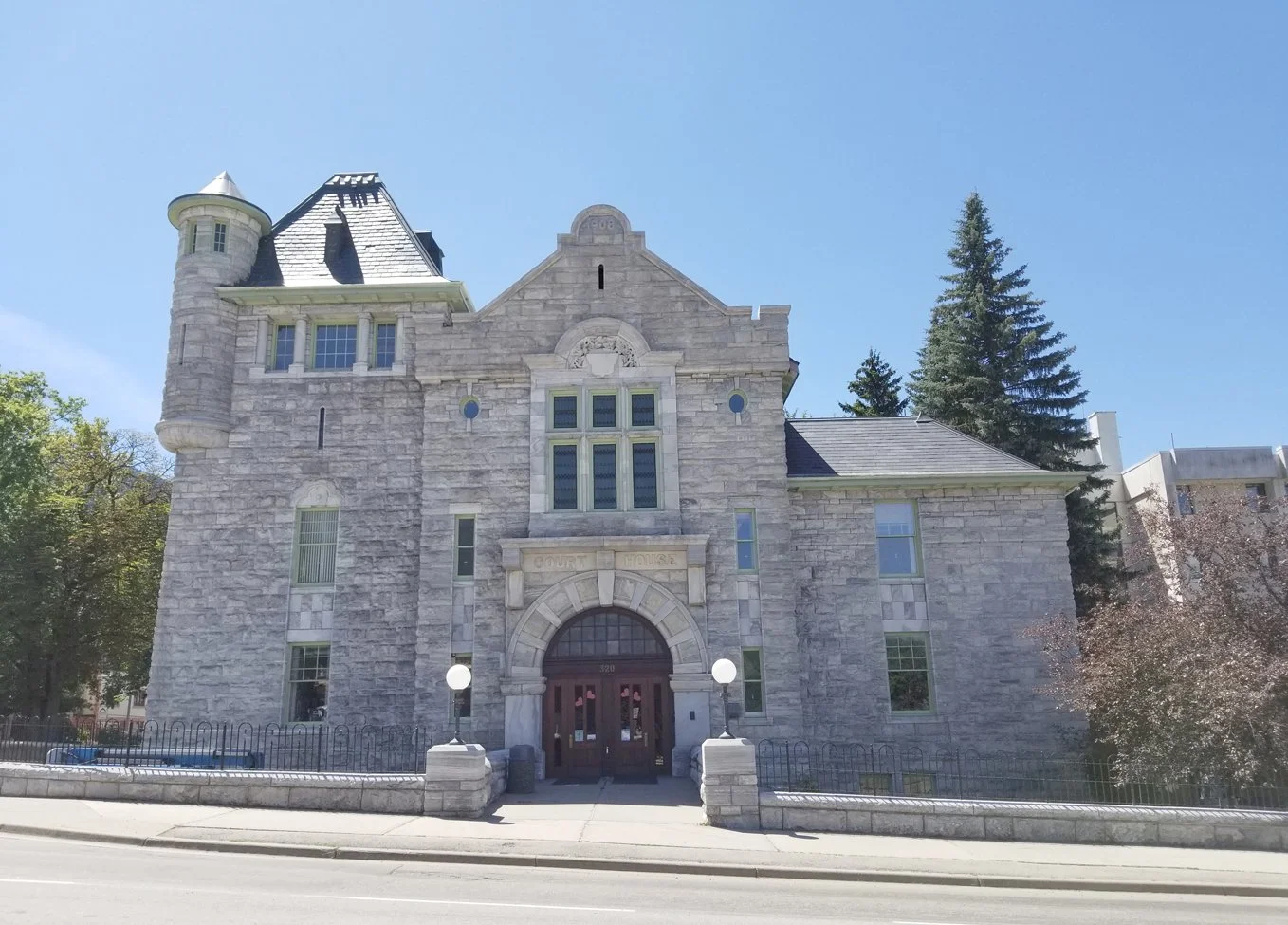
The B.C. Supreme Court in Nelson, where Andrew Cancela was sentenced Aug. 5, 2026, to a conditional sentence of two years less a day.
File photo
A Castlegar man convicted of possessing 444.6 grams of cocaine for the purpose of trafficking has been sentenced to two years less a day under a conditional sentence order requiring him to live under 24-hour house arrest at the Mustard Seed in Kamloops.
Andrew Cancela, 41, was sentenced Aug. 5 by B.C. Supreme Court Justice Lindsay Lyster in Nelson. The conditional sentence will be followed by two years of probation.
During the conditional sentence, Cancela cannot go to or come within 10 kilometres of Castlegar unless his conditional sentence supervisor gives him written permission in advance to visit his parents. He must live at the Mustard Seed in Kamloops and remain inside the residence or on its property 24 hours a day, with exceptions for support-group meetings, church, medical emergencies, and employment, education or other compelling reasons approved in writing by his supervisor.
The restriction on entering Castlegar will continue during the two-year probation order that follows his conditional sentence, again with an exception for visits to his parents approved in advance.
Cancela was found guilty after trial on Jan. 23, 2026, of possession of cocaine for the purpose of trafficking, simple possession of ketamine, simple possession of psilocybin, and failing to comply with a release order. The offences occurred in Castlegar on or about Nov. 10, 2022.
The Castlegar RCMP Crime Reduction Unit had been investigating Cancela in the fall of 2022 and obtained a warrant to search his residence. When police executed the warrant on Nov. 10, they found $1,200 in Canadian currency, four cellphones, 17 grams of ketamine, 10.4 grams of psilocin and psilocybin, and 444.6 grams of cocaine in powder and rock form.
Expert evidence placed the approximate value of the cocaine between $35,520 and $44,400. Lyster accepted expert evidence that Cancela was a “mid-level drug trafficker.”
At the time of the offences, Cancela was already subject to a release order prohibiting him from possessing drug paraphernalia suitable for the sale or consumption of drugs. He was convicted of breaching that order.
Previous convictions and lengthy pre-sentence restrictions
Cancela had twice previously been convicted of possession for the purpose of trafficking. He received a nine-month conditional sentence following a May 2013 conviction and, after another conviction in March 2020, received a 12-month sentence and 18 months of probation. He was also convicted of simple possession in November 2024 and fined $480.
After his arrest in the current case, Cancela spent 436 days in custody before being released on bail. By the time of the sentencing hearing, he had spent another 896 days living at the Mustard Seed under restrictive release conditions that Lyster described as amounting to house arrest.
Lyster agreed that the court should consider the length of time Cancela's liberty had already been restricted in custody and under strict bail conditions. Cancela specifically asked the judge not to give him credit for time already served, and she agreed to that request.
The Crown had sought a sentence of three to four years for the cocaine offence, along with seven-day sentences for each of the simple-possession counts and a seven-day consecutive sentence for the breach. The defence sought a conditional sentence of two years less a day followed by two years of probation.
Rehabilitation weighs heavily in sentence
The court had both a pre-sentence report and a psychiatric report before it, although Lyster said she gave greater weight to the pre-sentence report.
Cancela had been living at the Mustard Seed in Kamloops under his release conditions since March 26, 2024. According to the pre-sentence report, he said he had been sober for 39 months when he met with its writer, which Lyster believed was in March 2026, and credited the Mustard Seed with helping him maintain his sobriety. The organization's director told the report writer that Cancela was one of the best success stories he had seen and that other residents went to him for support and advice.
The pre-sentence report said Cancela took responsibility for the offences and showed regret for his earlier behaviour. Lyster nevertheless found some minimization in his explanation that he received no benefit from selling drugs and did it only to become intoxicated, given the expert evidence that he had been operating as a mid-level trafficker.
Cancela told both the pre-sentence report writer and the court that he did not plan to return to Castlegar and intended to remain in Kamloops. Lyster viewed that intention positively, while cautioning that his addiction and offending behaviour could follow him elsewhere if he did not remain vigilant about his sobriety.
When Cancela addressed the court himself at sentencing, he spoke about the work he had put into his sobriety and his plans for the future. Those plans included taking the responsible driver's program, applying for financial assistance to attend college for a Human Services diploma, and trying to help other men facing challenges similar to those he had experienced. He said his supports were in Kamloops and that was where he needed to stay.
Lyster also considered letters from Mustard Seed Men's Recovery Manager Jeff Arlitt, Christopher Wires, who knew Cancela through church, and Darren Donas, a B.C. Corrections chaplain and community support person in Kamloops. In his letter, Arlitt wrote that Cancela had done everything needed to graduate successfully from the Mustard Seed program and had become a strong peer support for other men.
The judge concluded that returning Cancela to jail could jeopardize the progress he had made since his arrest. She also pointed to the almost two-and-a-half years he had spent on bail at the Mustard Seed without issue in finding that allowing him to serve his sentence in the community would not endanger community safety.
At the same time, Lyster emphasized the seriousness of possessing a large quantity of cocaine for trafficking, Cancela's previous related record and his responsibility for the offence. She found that deterrence and denunciation remained important, but that his rehabilitation was more likely to continue under strict conditions in the community than if he were returned to jail.
In addition to house arrest and the Castlegar restriction, Cancela must complete the Mustard Seed program, abstain from alcohol and controlled substances except where medically prescribed, complete treatment or counselling as directed, and perform 100 hours of community work by Aug. 1, 2027.
Lyster warned that a breach of the conditional sentence could lead to prosecution and, in turn, incarceration for some or all of the unexpired portion of the sentence.





Nine new outdoor pickleball courts opened at Glenmore Recreation Park on Oct. 8, expanding public recreation facilities in north Kelowna as construction continues on other parts of the park.